
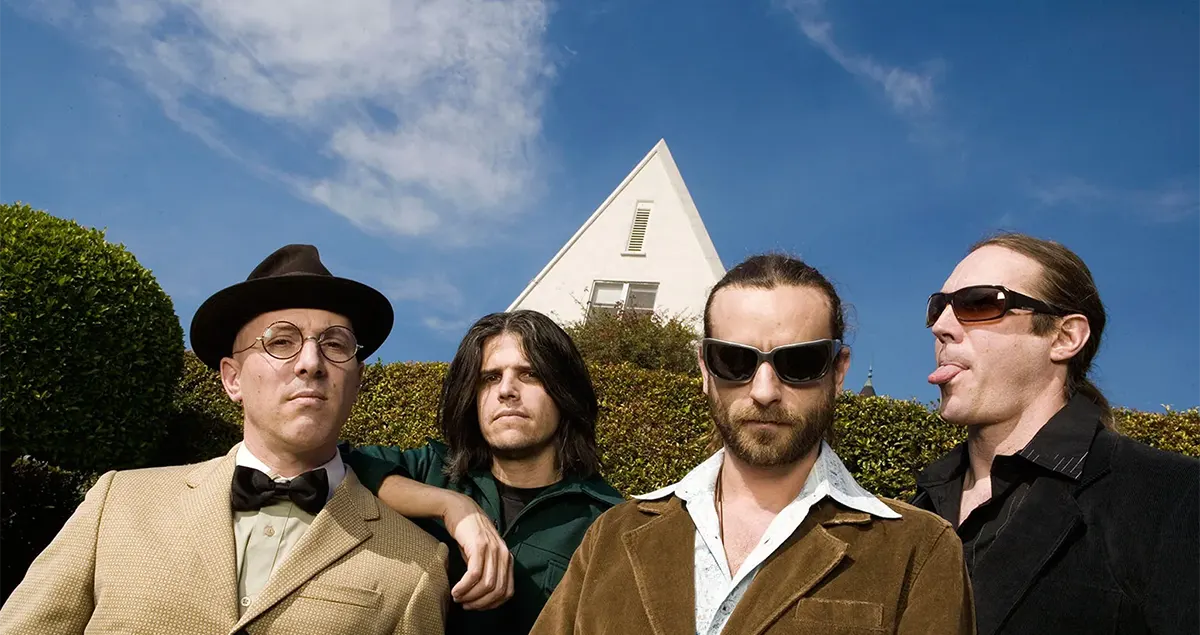
Tool: Control Disguised as Complexity
Tool is often described as complex, technical, or progressive. Those labels point to surface features, not intent. Tool’s real project isn’t complexity for its own sake—it’s control through structure.
Where many bands use complexity to impress, Tool uses it to limit choice. Rhythms constrain movement. Patterns dictate attention. Repetition becomes enforcement rather than comfort.
Tool doesn’t overwhelm the listener.
They contain the listener.
Repetition as Authority
Tool’s most misunderstood element is repetition. It’s often mistaken for hypnosis or trance. In reality, repetition functions as authority.
Patterns repeat not to soothe, but to assert dominance. Once a rhythmic cycle locks in, deviation feels intrusive. The listener adapts to the system rather than expecting variation.
This creates a hierarchy:
the structure leads, the listener follows.
Complexity Without Ornament
Tool’s complexity is spare. Notes exist only if they serve the system. There is no decorative excess, no virtuosic overflow. Every element is accountable.
Odd meters don’t create surprise; they create displacement. You never quite stand where you expect. That instability sharpens focus. Listening becomes physical—counting, bracing, adjusting.
The mind doesn’t drift.
It tracks.
The Voice as Pressure, Not Narrative
Vocals in Tool rarely function as storytelling devices. They apply pressure rather than convey plot. Words feel incantatory, accusatory, or diagnostic.
The voice doesn’t invite empathy. It confronts. Often it sounds less like expression and more like interrogation.
This shifts the relationship between band and listener. You’re not being told a story—you’re being placed under examination.
Dynamics as Enforcement
Tool’s dynamics don’t guide emotion; they regulate behavior. Quiet sections don’t relax the listener—they heighten anticipation. Loud sections don’t release tension—they formalize it.
The music never forgets its own gravity. Even at its most spacious, it feels supervised.
This is why Tool’s climaxes feel heavy rather than cathartic. They confirm the system instead of breaking it.
Spirituality Without Comfort
Tool frequently gestures toward spirituality, transcendence, and transformation. But these gestures never offer reassurance. There is no promise of enlightenment—only process.
Growth here is uncomfortable, repetitive, and demanding. Insight is earned through endurance, not revelation.
This refusal to comfort is central. Tool doesn’t sell transcendence. They present discipline.
Why Tool Feels Immovable
Decades on, Tool doesn’t sound dated because their music resists trends entirely. It’s insulated by structure. Fashion passes around it.
Their songs don’t age—they persist. Each listen reinforces the same boundaries, the same constraints, the same demands.
In a musical culture built on immediacy and novelty, that persistence feels almost confrontational.
Influence Without Dilution
Tool’s influence is widespread but difficult to copy. Many bands borrow the meters, the darkness, the intensity. Few replicate the restraint.
Because restraint requires confidence. It requires believing the system will hold without decoration.
Tool never doubts the system.
The Core Insight
Tool revealed that complexity doesn’t need to be expressive to be powerful. It can be regulatory. By enforcing structure, they turned listening into participation under rules.
They didn’t invite the listener in.
They set terms.
Final Thought
Tool matters because they treated music as a controlled environment rather than a performance. They proved that discipline can be immersive—and that power doesn’t need to announce itself to dominate.
Tool isn’t about release.
It’s about submission to structure.
And once inside, there is no shortcut out.