
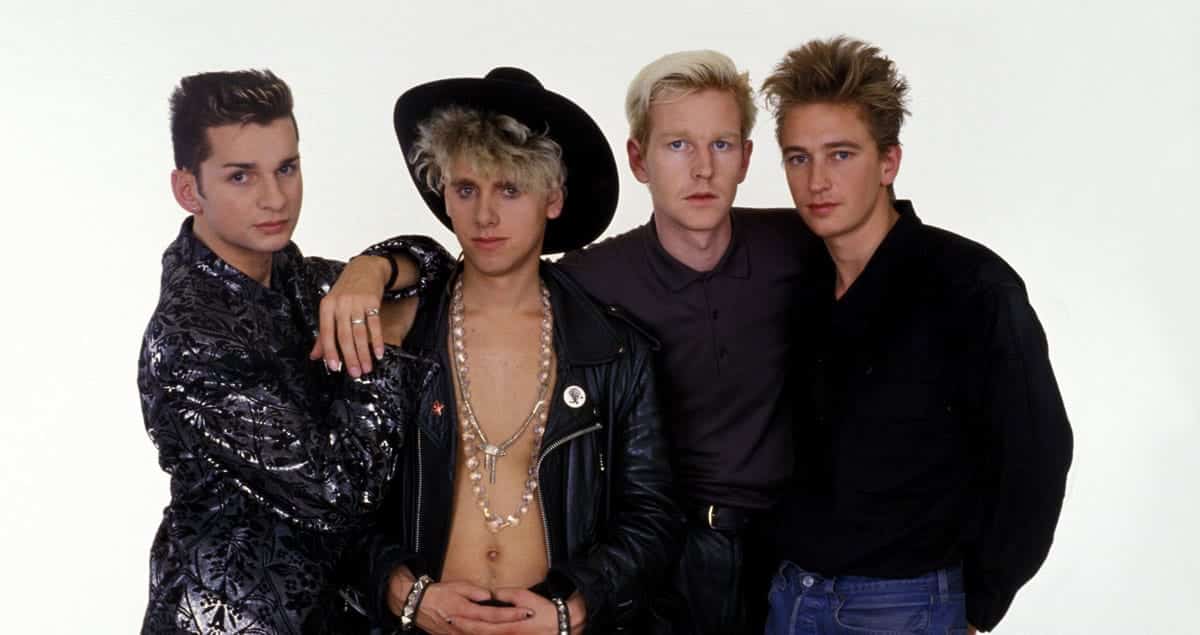
Depeche Mode Didn’t Humanize Machines — They Mechanized Feeling
Depeche Mode are often praised for making electronic music emotional. That framing flips the mechanism. They didn’t add warmth to machines; they reframed emotion as something that can operate mechanically.
Feeling, in Depeche Mode’s world, is not spontaneous or messy.
It’s repetitive, regulated, and inescapable.
RMU lens:
Emotion here behaves like a system you can’t shut down.
Control as the Source of Intensity
Where many bands seek intensity through release, Depeche Mode achieve it through containment.
Rhythms lock instead of swing
Patterns repeat instead of evolve
Structures persist instead of resolve
This restraint doesn’t cool emotion — it pressurizes it. The tighter the grid, the heavier the feeling becomes. Desire, guilt, faith, obsession all feel amplified because they’re trapped inside order.
RMU framing:
Discipline doesn’t suppress feeling; it concentrates it.
Darkness Without Chaos
Depeche Mode’s darkness is often mistaken for moodiness. In reality, it’s clarity without comfort.
Themes are explicit, not metaphorical
Tone is direct, not evasive
Emotion is acknowledged, not dramatized
There’s no romantic mess here. Pain is named, repeated, and lived with. That repetition turns darkness into routine, which is far more unsettling than spectacle.
RMU insight:
The scariest emotions are the ones that become normal.
Distance That Deepens Attachment
Depeche Mode rarely sound intimate in a traditional sense. Vocals feel mediated, arrangements feel deliberate, space feels measured.
Yet this distance creates attachment rather than alienation.
Why? Because listeners aren’t overwhelmed. They’re allowed to inhabit the feeling over time. The music doesn’t rush catharsis; it sustains presence.
RMU framing:
Distance can be a form of trust.
Ritual Over Narrative
Depeche Mode songs don’t tell stories — they establish rituals.
Repetition replaces plot
Atmosphere replaces progression
Tone replaces message
Listening becomes participation. You don’t follow a journey; you return to a state. That’s why their music ages differently — it doesn’t belong to a moment, but to a pattern of feeling.
Why They Escaped the “Electronic Trap”
Many electronic acts age poorly because their sound is tied to tools. Depeche Mode avoid this by anchoring their music to behavior, not technology.
Machines are present, but they’re not the point. The point is how humans behave when:
desire becomes repetitive
belief becomes structure
guilt becomes habit
RMU insight:
Technology changes. Patterns don’t.
Legacy: Seriousness Without Pretension
Depeche Mode didn’t make electronic music respectable.
They made seriousness sustainable.
They normalized:
emotional gravity without chaos
darkness without irony
repetition as meaning
Their influence isn’t about sound design.
It’s about emotional posture.
RMU Closing Thought
Depeche Mode quietly pose a difficult question:
What if emotion didn’t want freedom — only consistency?
They don’t promise release.
They don’t offer escape.
They offer something colder — and more durable:
A system where feeling repeats, persists, and becomes part of how you live.
And once emotion behaves like that,
it stops being dramatic —
and starts being real.