
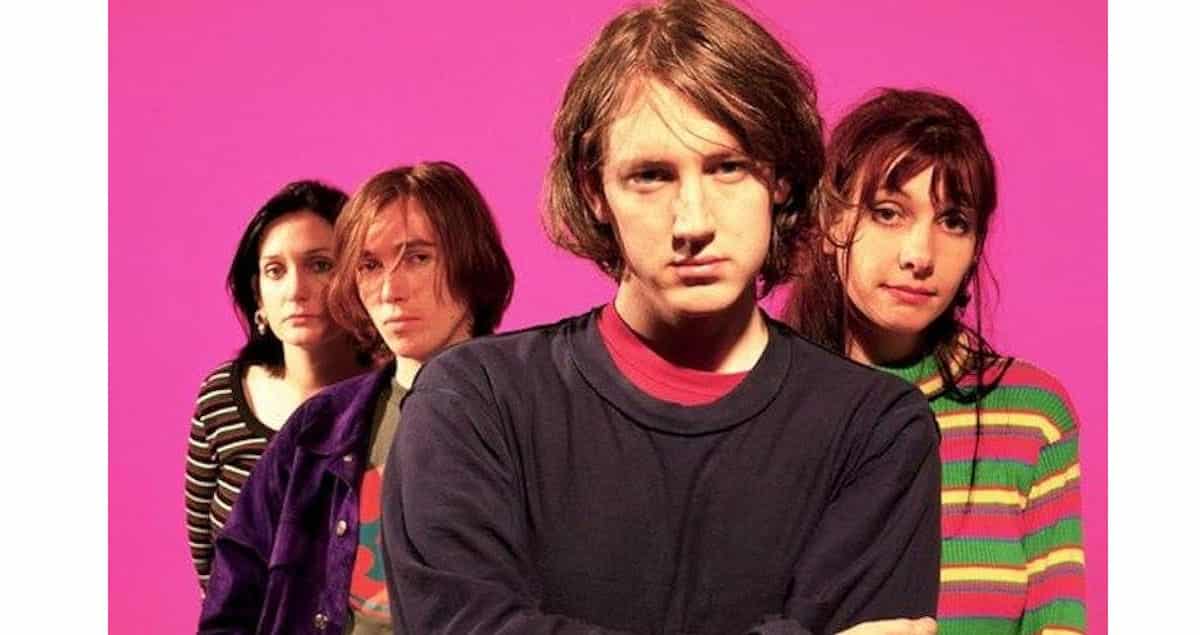
My Bloody Valentine: Volume That Turned Inward
My Bloody Valentine is often described as loud, blurred, or dreamy. Those descriptions point to texture, not intention. What My Bloody Valentine actually did was more radical:
They turned volume inward.
Instead of using loudness to project power or aggression, they used it to erase edges—between instruments, between songs, between listener and sound. Volume stopped being force. It became immersion.
Loudness Without Attack
In most rock music, loudness confronts. It hits, asserts, overwhelms. My Bloody Valentine rejected that logic. Their volume doesn’t strike—it envelops.
Sound arrives as mass rather than impact. Distortion smooths instead of sharpens. You don’t feel attacked; you feel surrounded.
This changes the role of the listener. You’re not facing the music. You’re inside it.
Blur as Structure
The band’s signature blur is often mistaken for vagueness. In reality, it’s highly controlled. Layers are placed precisely to dissolve distinction without collapsing coherence.
Melodies exist, but they’re submerged. Rhythms persist, but they’re softened. Nothing disappears completely—but nothing asserts dominance.
This balance creates a floating stability: motion without direction, presence without focus.
The Voice as Texture
Vocals in My Bloody Valentine don’t communicate narrative or emotion directly. They function as another layer—soft, indistinct, almost anonymous.
This anonymity is essential. By removing the authority of the voice, the music avoids hierarchy. Feeling isn’t explained or framed—it’s absorbed.
Emotion becomes atmospheric rather than expressive.
Repetition as Suspension
Repetition in My Bloody Valentine’s music doesn’t hypnotize or reassure. It suspends. Patterns loop not to resolve, but to maintain state.
The listener stops tracking progression and starts experiencing duration. Time stretches. Attention diffuses.
This suspension transforms listening from anticipation into presence.
Sensation Without Narrative
My Bloody Valentine doesn’t tell stories. It creates sensations. There’s no arc to follow, no message to extract.
This lack of narrative shifts responsibility to the body rather than the mind. You don’t interpret the music—you register it.
Few bands trusted sensation this fully.
Why It Still Feels Physical
My Bloody Valentine remains relevant because the body remains relevant. In an increasingly abstract, screen-based world, their music reasserts physical experience.
It bypasses analysis and goes straight to perception. You don’t think about it first. You feel it.
That immediacy doesn’t date.
Influence Through Atmosphere
Shoegaze as a genre absorbed the surface traits. But My Bloody Valentine’s deeper influence lies in atmosphere as primary content—not decoration.
They showed that sound itself could be the subject, not a vehicle for something else.
The Core Insight
My Bloody Valentine demonstrated that loudness doesn’t need to dominate. It can dissolve boundaries. By turning volume inward, they transformed noise into intimacy.
They didn’t blur music to hide it.
They blurred it to hold you inside.
Final Thought
My Bloody Valentine matters because they redefined how music occupies space—sonic, physical, emotional. They proved that intensity doesn’t need sharpness, and that immersion can be more powerful than impact.
They didn’t make music louder.
They made it closer.
And once closeness became possible at that scale, listening itself changed.