
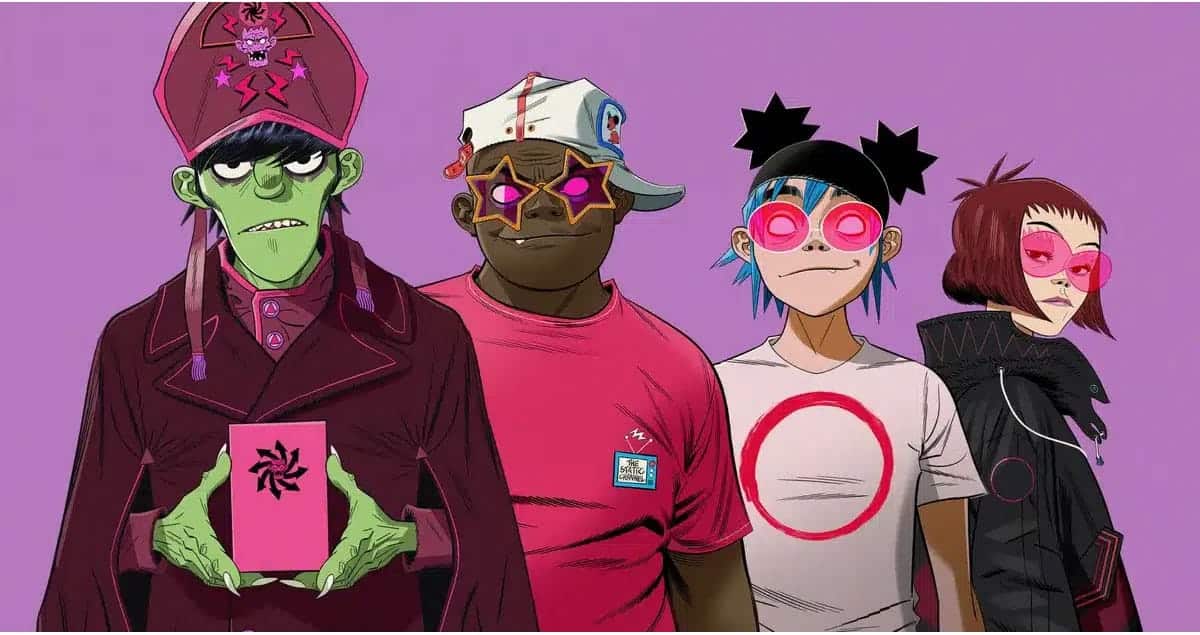
Gorillaz Didn’t Hide Behind Avatars — They Replaced the Band Itself
Gorillaz are often reduced to a gimmick: a “virtual band.” That framing misses the structural shift. Avatars weren’t decoration; they were infrastructure.
Gorillaz removed the traditional band as a visible, stable unit and replaced it with a flexible interface. Identity became modular. Sound became expandable. Continuity no longer depended on people, but on conceptual coherence.
RMU lens:
Gorillaz treat the band as a platform, not a personality.
Collaboration Without Center
Most collaborative projects still orbit a recognizable core. Gorillaz don’t. Their music feels assembled rather than authored.
Voices rotate without hierarchy
Styles coexist without blending
Genres pass through rather than merge
This creates a listening experience where cohesion comes from curation, not chemistry. The band doesn’t “play together” — it hosts.
RMU framing:
Gorillaz replace band chemistry with editorial logic.
Style as Transit, Not Destination
In Gorillaz’ universe, genres are not identities. They’re temporary states.
Nothing settles:
Sounds appear, then move on
Moods shift without apology
Aesthetic consistency is intentionally unstable
This isn’t eclecticism for novelty. It mirrors a world where culture itself is fragmented, fast-moving, and constantly recontextualized.
RMU insight:
Gorillaz sound like culture in motion, not music seeking purity.
Emotion Filtered Through Distance
Despite frequent emotional tones, Gorillaz rarely feel intimate. The mediation layers — animation, collaboration, production — act as emotional buffers.
You feel themes, not confession. Sentiment exists, but at arm’s length. This distance prevents over-identification while still allowing resonance.
RMU framing:
Gorillaz make feeling safe by never letting it feel personal.
Why Gorillaz Could Only Exist in the Modern Era
Gorillaz depend on:
Digital identity
Cross-genre fluency
Cultural sampling without gatekeeping
They are not nostalgic or forward-looking — they’re present-focused. Their structure assumes constant input, constant remixing, constant change.
Traditional bands seek permanence. Gorillaz assume flux.
Legacy: The Band as Framework
Gorillaz didn’t redefine a genre.
They redefined what a band can be.
They normalized:
Fictional identity as functional tool
Collaboration as default, not exception
Music as an ecosystem, not a statement
Their influence is less audible than architectural.
RMU Closing Thought
Gorillaz answer a foundational modern question:
What if identity was optional — and coherence came from intent instead of form?
They don’t resolve the tension between art and artifice.
They operate inside it.
And in doing so, they quietly signal the future of collective music-making —
not as a band you join, but as a space you enter.