
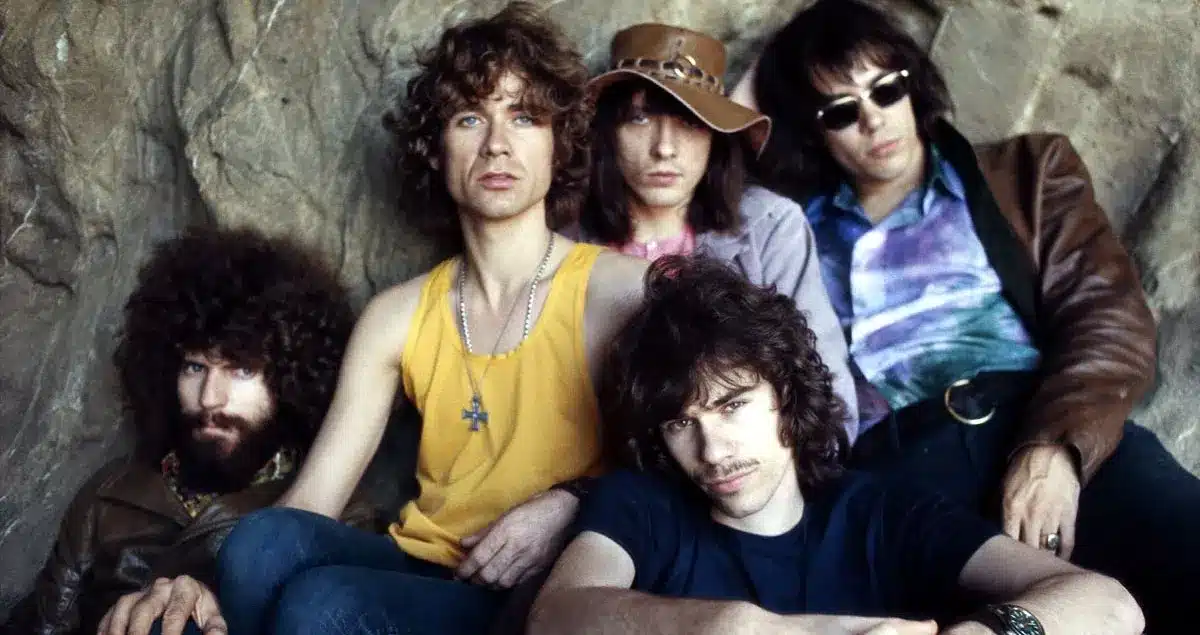
Steppenwolf: Freedom That Didn’t Pretend to Be Clean
Steppenwolf is often remembered through slogans—bikes, roads, rebellion. That shorthand misses the deeper rupture. Steppenwolf didn’t romanticize freedom. They presented it as friction.
Where many bands framed liberation as transcendence, Steppenwolf framed it as weighty, loud, and unresolved. Freedom wasn’t an escape from constraint; it was the sound of living without guarantees.
Movement Without Destination
Steppenwolf’s music moves constantly, but it rarely arrives. Riffs push forward with urgency, not triumph. There’s momentum without resolution—travel without arrival.
This distinction matters. Freedom here isn’t a promise of somewhere better. It’s the act of leaving anyway. Motion is the meaning.
The listener doesn’t feel uplifted.
They feel propelled.
Volume as Presence
Loudness in Steppenwolf isn’t theatrical. It’s present. The sound occupies space without apology, asserting existence rather than dominance.
Distortion doesn’t beautify. It roughens. The band doesn’t polish edges because edges are the point. You hear the cost of movement—the grind, the noise, the resistance.
Freedom sounds expensive.
The Voice as Declaration
Vocals in Steppenwolf function as statements rather than persuasion. The voice doesn’t seduce or confess; it declares. There’s urgency, but little sentimentality.
This keeps the music grounded. You’re not invited to dream—you’re asked to acknowledge conditions as they are.
Rebellion here isn’t fantasy.
It’s decision.
Simplicity Without Innocence
Steppenwolf’s structures are simple, but never naïve. Repetition isn’t comfort—it’s insistence. Hooks repeat to reinforce stance, not to soften it.
Simplicity becomes a vehicle for clarity. Nothing distracts from intent. The message isn’t hidden behind technique; it’s delivered directly.
Counterculture Without Romance
Steppenwolf often gets folded into countercultural nostalgia. But their sound resists romance. There’s no haze of idealism, no promise that rebellion resolves anything.
The music understands consequence. Freedom costs time, safety, belonging. Steppenwolf doesn’t deny that cost—they amplify it.
Why Steppenwolf Still Feels Relevant
Steppenwolf endures because freedom remains complicated. Modern life still asks for movement without certainty. Choices still demand loss.
Their music doesn’t offer solutions. It acknowledges the trade-off and keeps moving.
That honesty doesn’t age.
Influence Through Attitude
Steppenwolf influenced hard rock less through technique than through stance: loud without ornament, direct without apology, mobile without destination.
You hear that stance wherever music values decision over dream.
The Core Insight
Steppenwolf revealed that freedom isn’t purity or escape—it’s friction embraced. By refusing to clean it up, they made movement feel real.
They didn’t promise a road to salvation.
They put you on the road.
Final Thought
Steppenwolf matters because they treated freedom as an action rather than an idea. They showed that motion can be meaningful even when it leads nowhere certain.
They didn’t make rebellion beautiful.
They made it honest and loud.
And sometimes, that’s the only kind that lasts.