
The Dark Side of the Moon: Why Pink Floyd’s Masterpiece Changed Music Forever
Introduction
Released in 1973, The Dark Side of the Moon by Pink Floyd is widely considered one of the most influential albums in the history of rock music. More than just a collection of songs, the album is a carefully crafted sonic journey exploring themes of time, greed, mental illness, conflict, and the pressures of modern life.
With its seamless structure, groundbreaking studio techniques, and philosophical depth, the album redefined what a rock record could achieve. It spent an extraordinary over 900 weeks on the Billboard charts, becoming one of the best-selling albums of all time.
More than five decades after its release, The Dark Side of the Moon remains a defining moment in progressive rock and an essential milestone in the evolution of modern music.
The Context Behind the Album
By the early 1970s, Pink Floyd had already built a reputation for experimental music and ambitious live performances. Following albums like Meddle, the band began developing a new concept during their concerts under the working title “Eclipse.”
The idea was to create an album that addressed universal human anxieties—the pressures that drive people toward stress, madness, and existential reflection.
The themes were also deeply connected to the band’s own history, particularly the tragic story of former band member Syd Barrett, whose mental health struggles had profoundly affected the group.
This emotional and philosophical foundation gave the album a powerful narrative coherence rarely seen in rock music at the time.
The Recording Process
Recording sessions for the album took place at the legendary Abbey Road Studios between 1972 and 1973.
Working with producer Alan Parsons, the band experimented with innovative recording techniques that pushed the limits of studio technology.
Among the techniques used were:
Early synthesizers such as the EMS Synthi
Multi-track tape loops
Experimental sound effects
Spoken-word interviews recorded with studio staff
These elements were carefully woven into the album’s structure, giving the music an immersive and cinematic atmosphere.
The result was an album that felt less like a traditional record and more like a continuous sonic experience.
A Seamless Musical Journey
One of the defining characteristics of The Dark Side of the Moon is the way its songs flow seamlessly into one another. Rather than presenting separate tracks, the album unfolds like a single musical narrative.
The opening track, “Speak to Me,” introduces the album with a collage of heartbeats, voices, and sound effects that foreshadow the themes explored later.
From there, the album moves into “Breathe,” establishing the atmospheric tone that defines much of the record.
Later, the song “Time” confronts listeners with the unsettling realization of life slipping away unnoticed, while “Money” critiques the obsession with wealth and materialism.
The album closes with “Eclipse,” a powerful finale that ties together the album’s philosophical themes and emotional tension.
The Iconic Sound of the Album
Musically, The Dark Side of the Moon represents a perfect balance between accessibility and experimentation.
Keyboardist Richard Wright provided lush synthesizer textures and atmospheric piano arrangements that became central to the album’s sound.
Guitarist David Gilmour contributed some of the most expressive guitar solos in rock history, particularly in tracks like “Time” and “Money.”
Meanwhile, bassist and primary lyricist Roger Waters shaped the album’s conceptual direction, crafting lyrics that explored existential themes rarely addressed in mainstream rock music.
Drummer Nick Mason anchored the compositions with subtle rhythmic precision that supported the album’s complex arrangements.
Together, the four musicians created a sonic landscape that was both intellectually ambitious and emotionally resonant.
The Legendary Album Cover
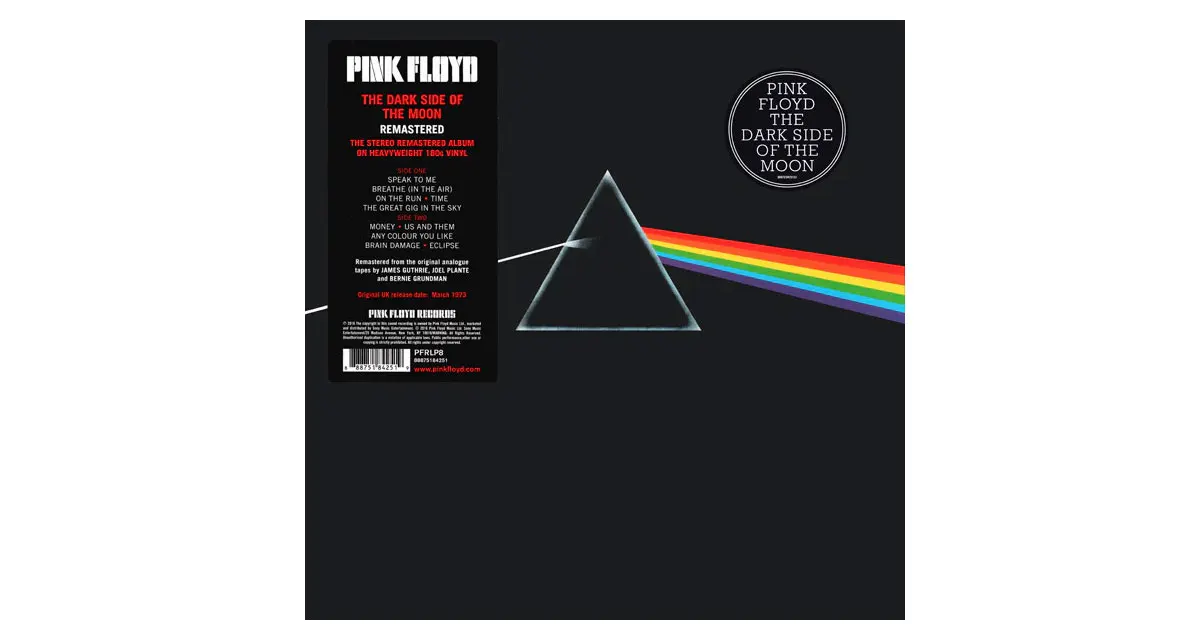
The album’s iconic prism artwork was designed by the graphic collective Hipgnosis, led by designer Storm Thorgerson.
The cover depicts a beam of white light passing through a prism and splitting into a rainbow spectrum.
This minimalist design symbolized several themes connected to the album:
light and sound
scientific curiosity
the fragmentation of human experience
Over time, the prism image became one of the most recognizable album covers in the history of music.
Cultural Impact and Legacy
Few albums have had a cultural impact comparable to The Dark Side of the Moon. Upon its release, the album achieved both critical acclaim and massive commercial success.
It remained on the Billboard charts for more than 900 weeks, an achievement that reflects its enduring popularity across generations.
The album also helped establish progressive rock as a major force in popular music during the 1970s.
Beyond its commercial success, the album influenced countless artists across multiple genres—from progressive rock and electronic music to modern alternative and experimental artists.
Even today, The Dark Side of the Moon is frequently ranked among the greatest albums ever recorded.
Why the Album Still Resonates
The enduring appeal of The Dark Side of the Moon lies in its universal themes. The album addresses questions that remain relevant decades after its release:
the passage of time
the pressures of modern society
the fragility of mental health
the pursuit of meaning in life
By combining philosophical reflection with groundbreaking musical innovation, Pink Floyd created a work that transcends the boundaries of traditional rock music.
For many listeners, the album is not just music—it is an experience that invites reflection about life itself.
Conclusion
More than fifty years after its release, The Dark Side of the Moon continues to stand as one of the most important artistic achievements in rock history.
Through its conceptual depth, innovative production, and timeless themes, Pink Floyd created an album that redefined the possibilities of popular music.
It remains a landmark of progressive rock and a testament to the power of music as a medium for artistic exploration and emotional expression.