
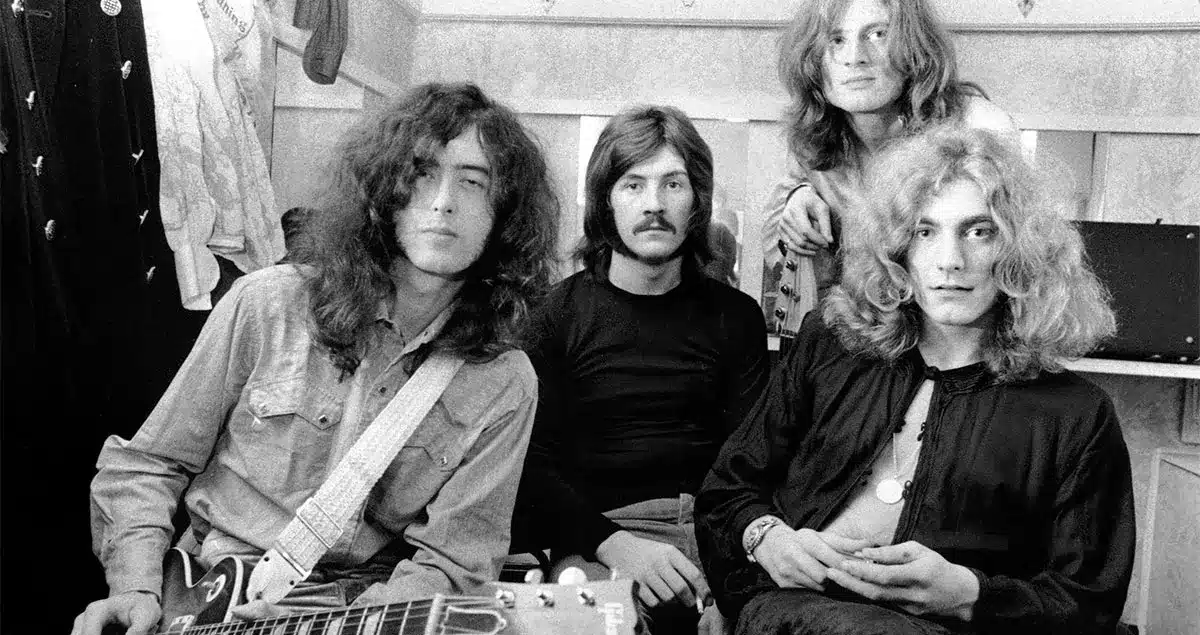
Led Zeppelin

Hızlı Bilgiler

  • Kuruluş: 1968

  • Köken: Londra, İngiltere

  • Türler: Hard Rock, Blues Rock, Heavy Rock, Folk Rock

  • Klasik Kadro: Jimmy Page (gitar), Robert Plant (vokal), John Paul Jones (bas/klavye), John Bonham (davul)

  • Faaliyet Yılları: 1968–1980


Köken Hikayesi – Bir Devi Doğuşu

Her şey bir sonla başladı.

1968’de, Jimmy Page kendini The Yardbirds’ın son kalan üyesi olarak buldu. Grup çöküyordu, ama Page’in stüdyo zamanı ayarlanmış ve İskandinavya’da konser tarihleri planlanmıştı. Hızla yeni bir gruba ihtiyacı vardı.

Bir arkadaş, güçlü, neredeyse vahşi bir blues sesi olan Birmingham’lı genç bir şarkıcıdan bahsetti: Robert Plant.

Page, Plant’in performansını izlemek için seyahat etti. Plant ağzını açar açmaz, bir şeyler yerine oturdu. Bu sadece ses aralığı değildi — bir varlık vardı. Gösteriden sonra, müzik hakkında saatlerce konuştular, paylaşılan takıntılar üzerinden bağ kurdular: Muddy Waters, Howlin’ Wolf ve belirsiz Amerikan blues kayıtları.

Plant, karşılıklı olarak, evde tanıdığı bir davulcu önerdi — gürültülü ve karizmatik John Bonham.

Bonham başlangıçta tereddüt etti. Başka teklifler vardı. Ama ısrar — ve inanç — onu ikna etti.

Kadroyu tamamlamak için Page, derin düzenleme deneyimine sahip çok enstrüman çalan oturum sanatçısı John Paul Jones’a yöneldi.

Dört müzisyen. Farklı geçmişler. Bir patlayıcı kimya.

İlk olarak “The New Yardbirds” adı altında performans sergilediler. Kısa süre sonra, grubun “kurşun balon” gibi düşeceği şakasından ilham alarak Led Zeppelin adını aldılar.

Tarih değişmişti.


Rock’ı Değiştiren Ses

Led Zeppelin ağır rock’ı icat etmedi — ama ölçeğini tanımladı.

Sadece 36 saatte kaydedilen ilk albümleri, şunları birleştirdi:

  • Ham Chicago blues

  • Psikedelik dokular

  • Folk mistisizmi

  • Yıkıcı amplifikasyon

Page, stüdyoya bir mimar gibi yaklaştı. Gitarları cerrahi bir hassasiyetle katmanladı. Bonham’ın davul sesi — devasa, geniş, neredeyse sismik — rock prodüksiyonunu yeniden tanımladı.

Plant sadece şarkı söylemiyordu; bir şeyler çağırıyordu.

İkinci albümleri geldiğinde, rock müziği dişlerini göstermişti.
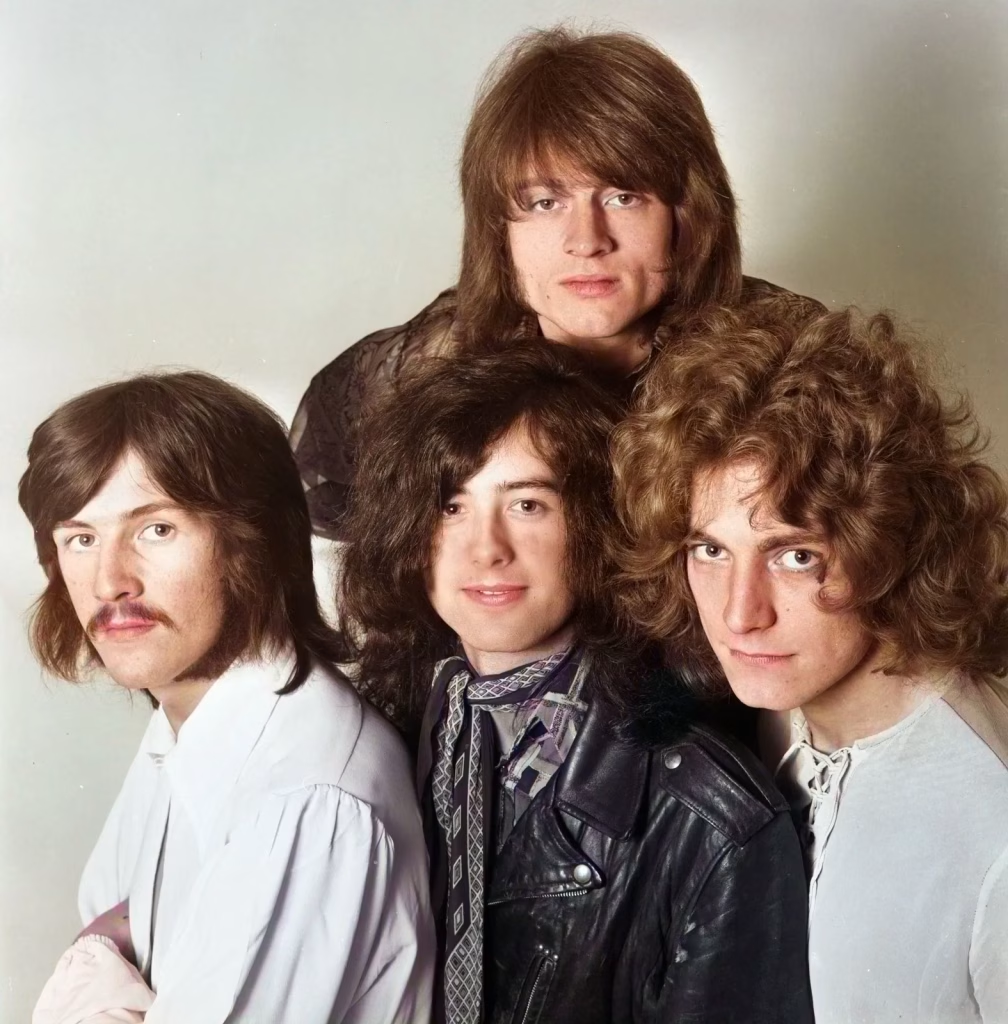
Led Zeppelin 1968 studio portrait John Bohham Jimmy Page Robert Plant John Paul Jones


Dönüm Noktası – Grubun Fenomene Dönüşmesi

1970’lerin başı, Led Zeppelin’i umut verici bir gruptan küresel bir güce dönüştürdü.

Birleşik Krallık’ta tekli yayınlamayı reddettiler.
TV görünümünden kaçındılar.
İmparatorluklarını albümler ve canlı gösterilerle inşa ettiler.

Ve o canlı gösteriler? Volkanikti.

Doğaçlama merkezi hale geldi. Şarkılar 20 dakikayı aştı. “Dazed and Confused” psikedelik bir ritüel haline geldi. Page, gitarında bir keman yayı kullandı. Bonham’ın soloları, depremler gibi hissediliyordu.

1973’e gelindiğinde, Amerika Birleşik Devletleri’ndeki arenalarda turlar saatler içinde tükendiğinde, Led Zeppelin dünyanın en büyük rock grubu haline gelmişti.

Kilometre Taşı Albümü – Led Zeppelin IV (1971)

İsimsiz. Kapakta grup adı yok. Pazarlama hilesi yok.

Sadece dört gizemli sembol.

Genellikle Led Zeppelin IV olarak bilinen bu kayıt, miraslarının döndüğü eksen haline geldi.

İçinde şunlar var:

  • Yıkıcı hard rock (“Black Dog”)

  • Folk zarafeti (“Going to California”)

  • Efsanevi blues gücü (“When the Levee Breaks”)

Ve elbette, türleri aşan bir şarkı.

Albüm, kimliğini kaybetmeden çeşitlilik sergiledi. Sadece yüksek sesle değil — vizyoner olduklarını kanıtladı.


İmza Şarkısı – “Stairway to Heaven”

“Stairway to Heaven” şarkısının kültürel ağırlığını taşıyan çok az şarkı vardır.

Akustik samimiyetten elektrikli zirveye yavaşça inşa edilen bu şarkı, bir yolculuk gibi açılır. Page, çoğunu Headley Grange’de besteledi, kaydediciler ve katmanlı gitarlarla denemeler yaptı. Plant’in sözleri mistisizm, belirsizlik ve ruhsal arayışla harmanlanıyor.

Bir nakarat yok.
Hiçbir geleneksel yapı yok.
Yine de rock tarihinin en çok çalınan şarkılarından biri haline geldi.

Canlı performanslar onu daha da yükseltti. Son solo sırasında, izleyiciler sadece dinlemiyordu — bir şeyin törenine tanıklık ediyorlardı.


Trajedi ve Son

1980’de, düşünülemez bir şey oldu.

John Bonham 32 yaşında hayatını kaybetti.

Grup, bütünlüklerini koruyan bir karar aldı:
Bonham olmadan, Led Zeppelin olmayacaktı.

Kısa süre sonra dağıldılar.

Yerine geçecek bir davulcu yok.
Sulandırılmış bir miras yok.

Sadece sessizlik — ve efsane.


Miras & Etki

Led Zeppelin’in etkisi neredeyse ölçülemez.

Şunları etkilediler:

  • Heavy metal’in yapısı

  • Arena rock’un ölçeği

  • Progressive rock’un hırsı

  • Blues canlanma hareketleri

Metallica’dan Soundgarden’a kadar gruplar, onları temelleri olarak gösteriyor. Albüm sanatı yaklaşımı, endüstri ekonomisini yeniden şekillendirdi.

Ama sayılar ve etki ötesinde, mirasları atmosferde yatıyor.

Rock’ı kadim, tehlikeli, efsanevi hissettirdiler.

On yıllar sonra bile, müzikleri canlı gibi geliyor — nostaljik değil.

Bu nadir.

Bu güç.


Led Zeppelin

Faits Rapides

  • Fondé : 1968

  • Origine : Londres, Angleterre

  • Genres : Hard Rock, Blues Rock, Heavy Rock, Folk Rock

  • Formation Classique : Jimmy Page (guitare), Robert Plant (chant), John Paul Jones (basse/claviers), John Bonham (batterie)

  • Années Actives : 1968–1980


L’Histoire d’Origine – La Naissance d’un Géant

Tout a commencé par une fin.

En 1968, Jimmy Page se retrouva comme le dernier membre restant des Yardbirds. Le groupe s’effondrait, mais Page avait du temps en studio réservé et des dates de tournée programmées en Scandinavie. Il avait besoin d’un nouveau groupe — rapidement.

Un ami mentionna un jeune chanteur de Birmingham avec une voix blues puissante, presque sauvage : Robert Plant.

Page se rendit voir Plant en performance. Au moment où Plant ouvrit la bouche, quelque chose se produisit. Ce n’était pas seulement la portée — c’était la présence. Après le concert, ils parlèrent de musique pendant des heures, se liant par des obsessions communes : Muddy Waters, Howlin’ Wolf, et des disques de blues américains obscurs.

Plant, à son tour, suggéra un batteur qu’il connaissait chez lui — le tonitruant et charismatique John Bonham.

Bonham était hésitant au début. Il avait d’autres offres. Mais la persistance — et la foi — l’emportèrent.

Pour compléter la formation, Page se tourna vers le vétéran des sessions John Paul Jones, un multi-instrumentiste avec une grande expérience en arrangement.

Quatre musiciens. Des origines différentes. Une chimie explosive.

Ils se produisirent d’abord sous le nom de “The New Yardbirds.” Peu après, inspirés par une blague selon laquelle le groupe tomberait comme un “plomb”, ils devinrent Led Zeppelin.

L’histoire avait changé.


Le Son Qui a Changé le Rock

Led Zeppelin n’a pas inventé le heavy rock — mais ils ont défini son ampleur.

Leur album de debut, enregistré en seulement 36 heures, fusionna :

  • Blues brut de Chicago

  • Textures psychédéliques

  • Mysticisme folk

  • Amplification écrasante

Page aborda le studio comme un architecte. Il superposa les guitares avec une précision chirurgicale. Le son de batterie de Bonham — massif, spacieux, presque sismique — redéfinissait la production rock.

Plant ne chantait pas seulement ; il invoquait.

Au moment où leur deuxième album arriva, la musique rock avait pris de l’ampleur.

Led Zeppelin 1968 studio portrait John Bohham Jimmy Page Robert Plant John Paul Jones


Le Tournant – Du Groupe au Phénomène

Le début des années 1970 transforma Led Zeppelin d’un groupe prometteur en force mondiale.

Ils refusèrent de sortir des singles au Royaume-Uni.
Ils évitèrent les apparitions à la télévision.
Ils construisirent leur empire à travers des albums et des concerts.

Et ces concerts ? Ils étaient volcaniques.

L’improvisation devint centrale. Les chansons s’étiraient au-delà de 20 minutes. “Dazed and Confused” devint un rituel psychédélique. Page utilisa un archet de violon sur sa guitare. Les solos de Bonham ressemblaient à des tremblements de terre.

En 1973, avec des tournées dans des arénas aux États-Unis se vendant en quelques heures, Led Zeppelin était devenu le plus grand groupe de rock au monde.

L’Album Marquant – Led Zeppelin IV (1971)

Sans titre. Pas de nom de groupe sur la couverture. Pas de gimmick marketing.

Juste quatre symboles mystérieux.

Communément connu sous le nom de Led Zeppelin IV, cet album est devenu l’axe autour duquel leur héritage tourne.

Il contient :

  • Hard rock écrasant (“Black Dog”)

  • Délicatesse folk (“Going to California”)

  • Pouvoir blues mythique (“When the Levee Breaks”)

Et, bien sûr, une chanson qui transcende les genres.

L’album mettait en avant une gamme sans perdre son identité. Il prouvait qu’ils n’étaient pas seulement bruyants — ils étaient visionnaires.


Chanson Signature – “Stairway to Heaven”

Peu de chansons portent le poids culturel de “Stairway to Heaven.”

Construite progressivement de l’intimité acoustique à un crescendo électrique, elle se déroule comme un voyage. Page en composa une grande partie à Headley Grange, expérimentant avec des enregistreurs et des guitares superposées. Les paroles de Plant mélangent mysticisme, ambiguïté et quête spirituelle.

Il n’y a pas de refrain.
Pas de structure conventionnelle.
Pourtant, elle est devenue l’une des chansons les plus jouées de l’histoire du rock.

Les performances live l’élevèrent encore plus. Au moment du solo final, le public n’écoutait pas seulement — il était témoin de quelque chose de cérémoniel.


Tragédie et Fin

En 1980, l’impensable se produisit.

John Bonham mourut à l’âge de 32 ans.

Le groupe prit une décision qui préserva leur intégrité :
Sans Bonham, il n’y aurait pas eu de Led Zeppelin.

Ils se séparèrent peu après.

Pas de batteur de remplacement.
Pas d’héritage dilué.

Juste le silence — et le mythe.


Héritage & Influence

L’impact de Led Zeppelin est presque incommensurable.

Ils ont influencé :

  • La structure du heavy metal

  • L’ampleur du rock d’arène

  • L’ambition du rock progressif

  • Les mouvements de revival du blues

Des groupes comme Metallica à Soundgarden les citent comme fondamentaux. Leur approche de l’art des albums a redéfini l’économie de l’industrie.

Mais au-delà des chiffres et de l’influence, leur héritage réside dans l’atmosphère.

Ils ont fait en sorte que le rock semble ancien. Dangereux. Mythique.

Même des décennies plus tard, leur musique semble vivante — pas nostalgique.

C’est rare.

C’est du pouvoir.


Led Zeppelin

Snelle Feiten

  • Opgericht: 1968

  • Oorsprong: Londen, Engeland

  • Genres: Hard Rock, Blues Rock, Heavy Rock, Folk Rock

  • Klassieke Line-Up: Jimmy Page (gitaar), Robert Plant (zang), John Paul Jones (bas/toetsen), John Bonham (drums)

  • Actieve Jaren: 1968–1980


Het Oorsprongsverhaal – De Geboorte van een Reus

Alles begon met een einde.

In 1968 bevond Jimmy Page zich als de laatste overgebleven lid van The Yardbirds. De band stortte in, maar Page had studiotijd geboekt en tourdata gepland in Scandinavië. Hij had snel een nieuwe groep nodig.

Een vriend noemde een jonge zanger uit Birmingham met een krachtige, bijna wilde bluesstem: Robert Plant.

Page reisde om Plant te zien optreden. Op het moment dat Plant zijn mond opende, klikte er iets. Het was niet alleen bereik — het was aanwezigheid. Na de show praatten ze urenlang over muziek en bonden ze over gedeelde obsessies: Muddy Waters, Howlin’ Wolf en obscure Amerikaanse bluesplaten.

Plant stelde op zijn beurt een drummer voor die hij thuis kende — de donderslag en charismatische John Bonham.

Bonham was in het begin aarzelend. Hij had andere aanbiedingen. Maar volharding — en geloof — wonnen hem over.

Om de line-up compleet te maken, wendde Page zich tot sessieveteraan John Paul Jones, een multi-instrumentalist met diepe arrangeerervaring.

Vier muzikanten. Verschillende achtergronden. Eén explosieve chemie.

Ze traden eerst op onder de naam “The New Yardbirds.” Kort daarna, geïnspireerd door een grap dat de band als een “loodballon” zou neerstorten, werden ze Led Zeppelin.

De geschiedenis was veranderd.


De Geluid dat Rock Veranderde

Led Zeppelin heeft heavy rock niet uitgevonden — maar ze definieerden de schaal ervan.

Hun debuutalbum, opgenomen in slechts 36 uur, fuseerde:

  • Rauwe Chicago blues

  • Psychedelische texturen

  • Folk mystiek

  • Verpletterende versterking

Page benaderde de studio als een architect. Hij laagde gitaren met chirurgische precisie. Bonham’s drumgeluid — massief, ruim, bijna seismisch — herdefinieerde rockproductie.

Plant zong niet alleen; hij riep op.

Tegen de tijd dat hun tweede album arriveerde, had rockmuziek tanden gekregen.

Led Zeppelin 1968 studio portrait John Bohham Jimmy Page Robert Plant John Paul Jones


Het Keerpunt – Van Band naar Fenomeen

Begin jaren ’70 transformeerde Led Zeppelin van veelbelovende groep naar wereldwijde kracht.

Ze weigerden singles uit te brengen in het VK.
Ze vermeden tv-optredens.
Ze bouwden hun imperium op via albums en live shows.

En die live shows? Ze waren vulkanisch.

Improvisatie werd centraal. Liedjes strekten zich uit tot meer dan 20 minuten. “Dazed and Confused” werd een psychedelisch ritueel. Page gebruikte een strijkstok op zijn gitaar. Bonham’s solo’s voelden als aardbevingen.

In 1973, met arena tours in de Verenigde Staten die binnen enkele uren uitverkocht waren, was Led Zeppelin de grootste rockband ter wereld geworden.

Het Mijlpaal Album – Led Zeppelin IV (1971)

Ongeëtiketteerd. Geen bandnaam op de cover. Geen marketingtruc.

Gewoon vier mysterieuze symbolen.

Algemeen bekend als Led Zeppelin IV, werd dit album de as waar rond hun nalatenschap draait.

Het bevat:

  • Verpletterende hard rock (“Black Dog”)

  • Folk delicatesse (“Going to California”)

  • Mythische blueskracht (“When the Levee Breaks”)

En, natuurlijk, één nummer dat genre overstijgt.

Het album toonde bereik zonder identiteit te verliezen. Het bewees dat ze niet alleen luid waren — ze waren visionair.


Handtekening Nummer – “Stairway to Heaven”

Weinig nummers dragen het culturele gewicht van “Stairway to Heaven.”

Geleidelijk opgebouwd van akoestische intimiteit naar elektrische crescendo, ontvouwt het zich als een reis. Page componeerde een groot deel ervan in Headley Grange, experimenteerde met opnames en gelaagde gitaren. Plant’s teksten combineren mystiek, ambiguïteit en spirituele zoektocht.

Er is geen refrein.
Geen conventionele structuur.
Toch werd het een van de meest gespeelde nummers in de rockgeschiedenis.

Live-optredens tilde het verder omhoog. Tegen de laatste solo luisterden de toeschouwers niet alleen — ze waren getuige van iets ceremonieel.


Tragedie en het Einde

In 1980 gebeurde het ondenkbare.

John Bonham stierf op 32-jarige leeftijd.

De band nam een beslissing die hun integriteit behield:
Zonder Bonham zou er geen Led Zeppelin zijn.

Ze gingen kort daarna uit elkaar.

Geen vervangende drummer.
Geen verwaterde nalatenschap.

Gewoon stilte — en mythe.


Erfenis & Invloed

De impact van Led Zeppelin is bijna onmeetbaar.

Ze beïnvloedden:

  • De structuur van heavy metal

  • De schaal van arena rock

  • De ambitie van progressieve rock

  • Blues revivalbewegingen

Bands van Metallica tot Soundgarden noemen hen als fundamenteel. Hun benadering van albumkunst heeft de economische structuur van de industrie hervormd.

Maar voorbij cijfers en invloed ligt hun nalatenschap in de sfeer.

Ze lieten rock oud aanvoelen. Gevaarlijk. Mythisch.

Zelfs decennia later klinkt hun muziek levend — niet nostalgisch.

Dat is zeldzaam.

Dat is kracht.


Led Zeppelin

Schnelle Fakten

  • Gegründet: 1968

  • Herkunft: London, England

  • Genres: Hard Rock, Blues Rock, Heavy Rock, Folk Rock

  • Klassische Besetzung: Jimmy Page (Gitarre), Robert Plant (Gesang), John Paul Jones (Bass/Tasten), John Bonham (Schlagzeug)

  • Aktive Jahre: 1968–1980


Die Ursprungsgeschichte – Die Geburt eines Giganten

Alles begann mit einem Ende.

Im Jahr 1968 fand sich Jimmy Page als das letzte verbleibende Mitglied der Yardbirds wieder. Die Band zerfiel, aber Page hatte Studiozeit gebucht und Tourdaten in Skandinavien geplant. Er brauchte schnell eine neue Gruppe.

Ein Freund erwähnte einen jungen Sänger aus Birmingham mit einer kraftvollen, fast wilden Bluesstimme: Robert Plant.

Page reiste, um Plant auftreten zu sehen. In dem Moment, als Plant den Mund öffnete, klickte es. Es war nicht nur die Reichweite – es war die Präsenz. Nach dem Auftritt sprachen sie stundenlang über Musik und verbanden sich über gemeinsame Obsessionen: Muddy Waters, Howlin’ Wolf und obskure amerikanische Bluesplatten.

Plant schlug seinerseits einen Schlagzeuger vor, den er von zu Hause kannte – den donnernden und charismatischen John Bonham.

Bonham war zunächst zögerlich. Er hatte andere Angebote. Aber Beharrlichkeit – und Glaube – überzeugten ihn.

Um die Besetzung zu vervollständigen, wandte sich Page an den erfahrenen Sessionmusiker John Paul Jones, einen Multiinstrumentalisten mit tiefen Arrangierkenntnissen.

Vier Musiker. Unterschiedliche Hintergründe. Eine explosive Chemie.

Sie traten zunächst unter dem Namen „The New Yardbirds“ auf. Kurz darauf, inspiriert von einem Witz, dass die Band wie ein „Bleiballon“ untergehen würde, wurden sie Led Zeppelin.

Die Geschichte hatte sich gewendet.


Der Sound, der Rock veränderte

Led Zeppelin erfand den Heavy Rock nicht – aber sie definierten seinen Maßstab.

Ihr Debütalbum, das in nur 36 Stunden aufgenommen wurde, vereinte:

  • Rohes Chicago-Blues

  • Psychedelische Texturen

  • Folk-Mystik

  • Zerschmetternde Verstärkung

Page ging im Studio wie ein Architekt vor. Er schichtete Gitarren mit chirurgischer Präzision. Der Schlagzeugsound von Bonham – massiv, geräumig, fast seismisch – definierte die Rockproduktion neu.

Plant sang nicht nur; er beschwor.

Als ihr zweites Album erschien, hatte die Rockmusik Zähne bekommen.

Led Zeppelin 1968 studio portrait John Bohham Jimmy Page Robert Plant John Paul Jones


Der Wendepunkt – Von der Band zum Phänomen

Die frühen 1970er Jahre verwandelten Led Zeppelin von einer vielversprechenden Gruppe in eine globale Kraft.

Sie weigerten sich, Singles im Vereinigten Königreich zu veröffentlichen.
Sie vermieden TV-Auftritte.
Sie bauten ihr Imperium durch Alben und Live-Shows auf.

Und diese Live-Shows? Sie waren vulkanisch.

Improvisation wurde zentral. Songs dehnten sich über 20 Minuten aus. „Dazed and Confused“ wurde zu einem psychedelischen Ritual. Page verwendete einen Geigenbogen auf seiner Gitarre. Bonhams Soli fühlten sich wie Erdbeben an.

Bis 1973, als die Arena-Tourneen in den Vereinigten Staaten in Stunden ausverkauft waren, war Led Zeppelin die größte Rockband der Welt geworden.

Das Meilenstein-Album – Led Zeppelin IV (1971)

Unbetitelt. Kein Bandname auf dem Cover. Kein Marketing-Gimmick.

Nur vier mysteriöse Symbole.

Allgemein bekannt als Led Zeppelin IV, wurde diese Platte zur Achse, um die sich ihr Erbe dreht.

Sie enthält:

  • Zerschmetternden Hard Rock (“Black Dog”)

  • Folk-Zartheit (“Going to California”)

  • Mythische Blues-Power (“When the Levee Breaks”)

Und natürlich ein Lied, das Genre übergreifend ist.

Das Album zeigte Vielfalt, ohne die Identität zu verlieren. Es bewies, dass sie nicht nur laut waren – sie waren visionär.


Signatursong – “Stairway to Heaven”

Wenige Songs tragen das kulturelle Gewicht von “Stairway to Heaven.”

Allmählich aufgebaut von akustischer Intimität zu elektrischem Crescendo entfaltet es sich wie eine Reise. Page komponierte einen Großteil davon in Headley Grange, experimentierte mit Aufnahmegeräten und geschichteten Gitarren. Plants Texte verbinden Mystik, Mehrdeutigkeit und spirituelle Suche.

Es gibt keinen Refrain.
Keine konventionelle Struktur.
Dennoch wurde es zu einem der meistgespielten Lieder in der Rockgeschichte.

Live-Aufführungen hoben es weiter an. Bei dem finalen Solo hörten die Zuschauer nicht nur zu – sie waren Zeugen von etwas Zeremoniellem.


Tragödie und das Ende

Im Jahr 1980 geschah das Unvorstellbare.

John Bonham starb im Alter von 32 Jahren.

Die Band traf eine Entscheidung, die ihre Integrität bewahrte:
Ohne Bonham würde es kein Led Zeppelin geben.

Sie lösten sich kurz darauf auf.

Kein Ersatzschlagzeuger.
Kein verwässertes Erbe.

Nur Stille – und Mythos.


Vermächtnis & Einfluss

Der Einfluss von Led Zeppelin ist fast unermesslich.

Sie beeinflussten:

  • Die Struktur des Heavy Metal

  • Den Maßstab des Arena Rock

  • Die Ambitionen des Progressive Rock

  • Bewegungen der Blues-Renaissance

Bands von Metallica bis Soundgarden nennen sie als grundlegend. Ihr Ansatz zur Albumkunst hat die wirtschaftlichen Rahmenbedingungen der Branche neu gestaltet.

Aber jenseits von Zahlen und Einfluss liegt ihr Erbe in der Atmosphäre.

Sie ließen Rock uralt, gefährlich und mythisch erscheinen.

Selbst Jahrzehnte später klingt ihre Musik lebendig – nicht nostalgisch.

Das ist selten.

Das ist Macht.


Led Zeppelin

Quick Facts

  • Founded: 1968

  • Origin: London, England

  • Genres: Hard Rock, Blues Rock, Heavy Rock, Folk Rock

  • Classic Line-Up: Jimmy Page (guitar), Robert Plant (vocals), John Paul Jones (bass/keys), John Bonham (drums)

  • Years Active: 1968–1980


The Origin Story – The Birth of a Giant

Everything began with an ending.

In 1968, Jimmy Page found himself as the last remaining member of The Yardbirds. The band was collapsing, but Page had studio time booked and tour dates scheduled in Scandinavia. He needed a new group — fast.

A friend mentioned a young singer from Birmingham with a powerful, almost feral blues voice: Robert Plant.

Page traveled to see Plant perform. The moment Plant opened his mouth, something clicked. It wasn’t just range — it was presence. After the show, they talked music for hours, bonding over shared obsessions: Muddy Waters, Howlin’ Wolf, and obscure American blues records.

Plant, in turn, suggested a drummer he knew back home — the thunderous and charismatic John Bonham.

Bonham was hesitant at first. He had other offers. But persistence — and belief — won him over.

To complete the lineup, Page turned to session veteran John Paul Jones, a multi-instrumentalist with deep arranging experience.

Four musicians. Different backgrounds. One explosive chemistry.

They first performed under the name “The New Yardbirds.” Shortly after, inspired by a joke that the band would go down like a “lead balloon,” they became Led Zeppelin.

History had shifted.


The Sound That Changed Rock

Led Zeppelin didn’t invent heavy rock — but they defined its scale.

Their debut album, recorded in just 36 hours, fused:

  • Raw Chicago blues

  • Psychedelic textures

  • Folk mysticism

  • Crushing amplification

Page approached the studio like an architect. He layered guitars with surgical precision. Bonham’s drum sound — massive, roomy, almost seismic — redefined rock production.

Plant wasn’t just singing; he was summoning.

By the time their second album arrived, rock music had grown teeth.


The Turning Point – From Band to Phenomenon

The early 1970s transformed Led Zeppelin from promising group to global force.

They refused to release singles in the UK.
They avoided TV appearances.
They built their empire through albums and live shows.

And those live shows? They were volcanic.

Improvisation became central. Songs stretched past 20 minutes. “Dazed and Confused” became a psychedelic ritual. Page used a violin bow on his guitar. Bonham’s solos felt like earthquakes.

By 1973, with arena tours in the United States selling out in hours, Led Zeppelin had become the biggest rock band in the world.

The Milestone Album – Led Zeppelin IV (1971)


Untitled. No band name on the cover. No marketing gimmick.

Just four mysterious symbols.

Commonly known as Led Zeppelin IV, this record became the axis around which their legacy spins.

It contains:

  • Crushing hard rock (“Black Dog”)

  • Folk delicacy (“Going to California”)

  • Mythic blues power (“When the Levee Breaks”)

And, of course, one song that transcended genre.

The album showcased range without losing identity. It proved they weren’t just loud — they were visionary.


Signature Song – “Stairway to Heaven”

Few songs carry the cultural weight of “Stairway to Heaven.”

Built gradually from acoustic intimacy to electric crescendo, it unfolds like a journey. Page composed much of it at Headley Grange, experimenting with recorders and layered guitars. Plant’s lyrics blend mysticism, ambiguity, and spiritual searching.

There is no chorus.
No conventional structure.
Yet it became one of the most played songs in rock history.

Live performances elevated it further. By the final solo, audiences weren’t just listening — they were witnessing something ceremonial.


Tragedy and the End

In 1980, the unthinkable happened.

John Bonham died at age 32.

The band made a decision that preserved their integrity:
Without Bonham, there would be no Led Zeppelin.

They disbanded shortly after.

No replacement drummer.
No diluted legacy.

Just silence — and myth.


Legacy & Influence

Led Zeppelin’s impact is almost immeasurable.

They influenced:

  • Heavy metal’s structure

  • Arena rock’s scale

  • Progressive rock’s ambition

  • Blues revival movements

Bands from Metallica to Soundgarden cite them as foundational. Their approach to album artistry reshaped industry economics.

But beyond numbers and influence, their legacy lies in atmosphere.

They made rock feel ancient. Dangerous. Mythic.

Even decades later, their music sounds alive — not nostalgic.

That’s rare.

That’s power.

Top 14 Led Zeppelin Songs

🔥 Classic Line-Up (1968–1980)

These four musicians defined the sound, identity, and myth of Led Zeppelin.

🎸 Jimmy Page

Role: Guitar, Producer
The architect of Led Zeppelin’s sound. Former member of The Yardbirds and one of the most in-demand session guitarists in 1960s London.

  • Known for layered production techniques

  • Used a violin bow on guitar

  • Mastermind behind studio experimentation

  • Main founder of the band

Page shaped the sonic landscape — heavy riffs, mystical textures, and epic structures.


🎤 Robert Plant

Role: Vocals, Lyrics
The voice. Wild, blues-rooted, and mythic.

  • Powerful high-range vocal style

  • Lyrics inspired by blues, folklore, mysticism

  • Charismatic frontman presence

Plant gave Led Zeppelin its emotional and spiritual dimension.


🥁 John Bonham

Role: Drums
Often considered one of the greatest rock drummers ever.

  • Massive, thunderous sound

  • Precision with raw power

  • Famous for the solo “Moby Dick”

His groove and weight made the band physically feel heavier than their peers.


🎹 John Paul Jones

Role: Bass, Keyboards, Arrangements
The quiet genius.

  • Multi-instrumentalist

  • Strong musical theory background

  • Added orchestration and depth

Jones balanced the chaos with structure and sophistication.


👥 Other Official Contributors

While Led Zeppelin never had permanent replacements during their active years, post-1980 reunions featured guest drummers:

  • Jason Bonham (John Bonham’s son) – performed at reunion shows, including the 2007 O2 Arena concert.


⚡ Important Note

Led Zeppelin’s identity was inseparable from its four original members.
After John Bonham’s death in 1980, the band chose to disband rather than replace him — preserving the integrity of the lineup.

🎸 Led Zeppelin – Complete Studio Discography

1. Led Zeppelin (1969)

The explosive debut. Recorded in roughly 36 hours, it fused Chicago blues, psychedelic textures, and raw amplification. Tracks like “Dazed and Confused” and “Communication Breakdown” introduced the band’s dark, heavy dynamic.

2. Led Zeppelin II (1969)

Heavier, tighter, and more aggressive. Built largely during tour breaks, it delivered the iconic “Whole Lotta Love.” This album solidified their dominance in the American market.

3. Led Zeppelin III (1970)

A bold stylistic shift. Acoustic folk elements took center stage alongside hard rock. “Immigrant Song” became one of their most recognizable anthems, while softer tracks revealed a more pastoral side.

4. Led Zeppelin IV (1971)

Untitled and mysterious, often referred to as Led Zeppelin IV. This is their defining record. It includes “Black Dog,” “Rock and Roll,” “When the Levee Breaks,” and the legendary “Stairway to Heaven.” A masterpiece of range and atmosphere.

5. Houses of the Holy (1973)

More experimental and groovy. Funk influences appeared in “The Crunge,” reggae textures in “D’yer Mak’er,” and epic structure in “No Quarter.” It proved they were never predictable.

6. Physical Graffiti (1975)

A double album showcasing their full spectrum — hard rock, blues, folk, Eastern influences. Standouts include “Kashmir,” “Trampled Under Foot,” and “Ten Years Gone.” Often considered their most ambitious work.

7. Presence (1976)

Recorded during a turbulent period, this album leaned heavily into intense guitar work. “Achilles Last Stand” is one of their most powerful and complex compositions.

8. In Through the Out Door (1979)

A more keyboard-driven, polished sound. Songs like “Fool in the Rain” showed a lighter rhythmic touch. It became their final studio album before tragedy struck.


📀 Posthumous Studio Release

9. Coda (1982)

Released after the band disbanded, this compilation of unreleased tracks and leftovers served as a closing chapter.