
Quick Facts
Founded: 1968
Origin: London, England
Genres: Hard Rock, Blues Rock, Heavy Rock, Folk Rock
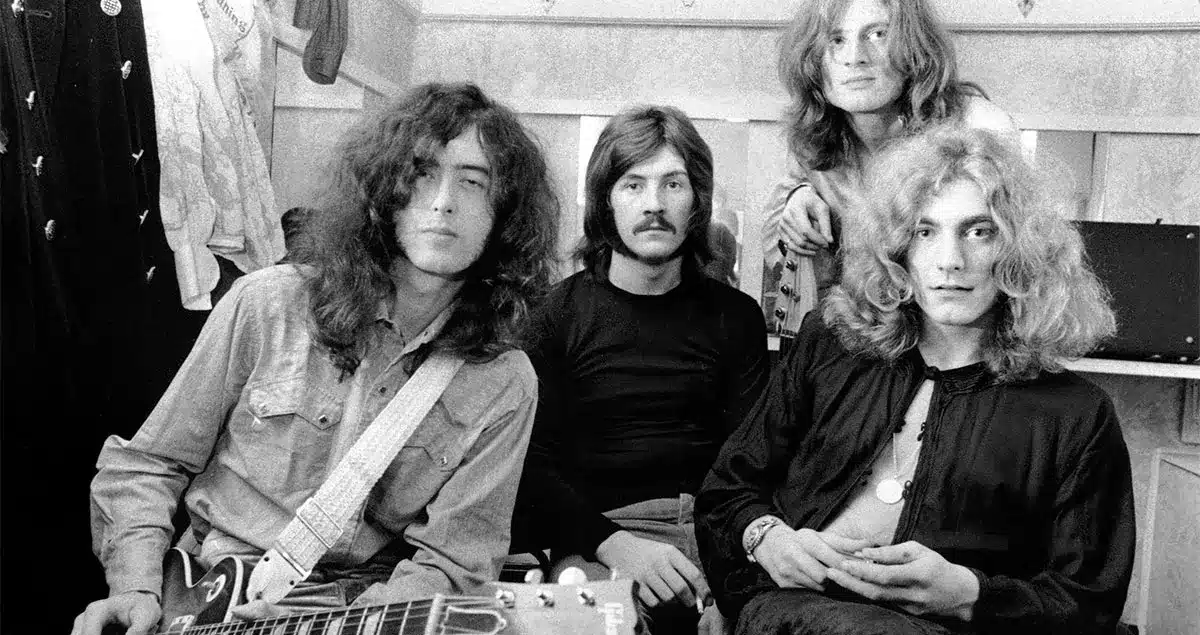
Classic Line-Up: Jimmy Page (guitar), Robert Plant (vocals), John Paul Jones (bass/keys), John Bonham (drums)
Years Active: 1968–1980
The Origin Story – The Birth of a Giant
Everything began with an ending.
In 1968, Jimmy Page found himself as the last remaining member of The Yardbirds. The band was collapsing, but Page had studio time booked and tour dates scheduled in Scandinavia. He needed a new group — fast.
A friend mentioned a young singer from Birmingham with a powerful, almost feral blues voice: Robert Plant.
Page traveled to see Plant perform. The moment Plant opened his mouth, something clicked. It wasn’t just range — it was presence. After the show, they talked music for hours, bonding over shared obsessions: Muddy Waters, Howlin’ Wolf, and obscure American blues records.
Plant, in turn, suggested a drummer he knew back home — the thunderous and charismatic John Bonham.
Bonham was hesitant at first. He had other offers. But persistence — and belief — won him over.
To complete the lineup, Page turned to session veteran John Paul Jones, a multi-instrumentalist with deep arranging experience.
Four musicians. Different backgrounds. One explosive chemistry.
They first performed under the name “The New Yardbirds.” Shortly after, inspired by a joke that the band would go down like a “lead balloon,” they became Led Zeppelin.
History had shifted.
The Sound That Changed Rock
Led Zeppelin didn’t invent heavy rock — but they defined its scale.
Their debut album, recorded in just 36 hours, fused:
Raw Chicago blues
Psychedelic textures
Folk mysticism
Crushing amplification
Page approached the studio like an architect. He layered guitars with surgical precision. Bonham’s drum sound — massive, roomy, almost seismic — redefined rock production.
Plant wasn’t just singing; he was summoning.
By the time their second album arrived, rock music had grown teeth.
The Turning Point – From Band to Phenomenon
The early 1970s transformed Led Zeppelin from promising group to global force.
They refused to release singles in the UK.
They avoided TV appearances.
They built their empire through albums and live shows.
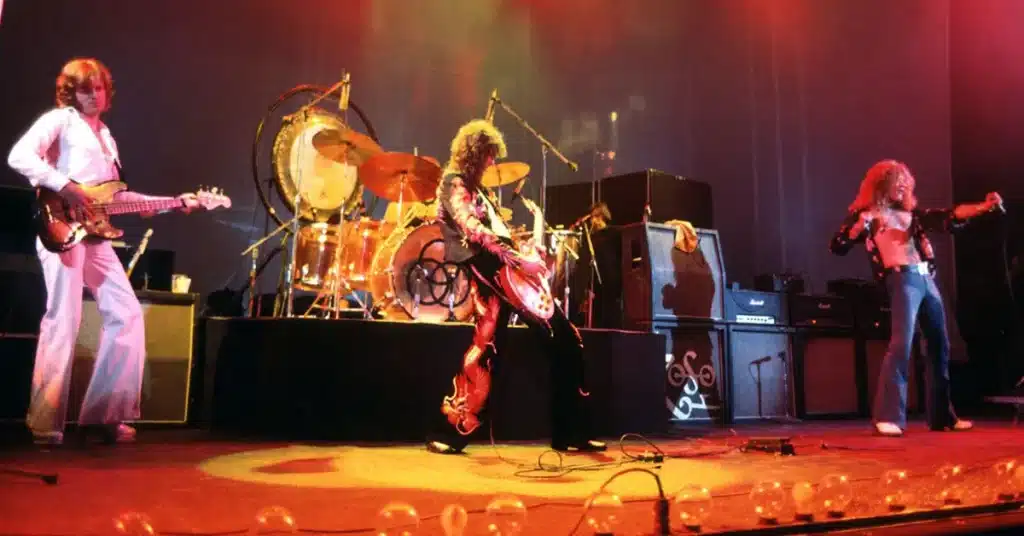
And those live shows? They were volcanic.
Improvisation became central. Songs stretched past 20 minutes. “Dazed and Confused” became a psychedelic ritual. Page used a violin bow on his guitar. Bonham’s solos felt like earthquakes.
By 1973, with arena tours in the United States selling out in hours, Led Zeppelin had become the biggest rock band in the world.
The Milestone Album – Led Zeppelin IV (1971)
Untitled. No band name on the cover. No marketing gimmick.
Just four mysterious symbols.
Commonly known as Led Zeppelin IV, this record became the axis around which their legacy spins.
It contains:
Crushing hard rock (“Black Dog”)
Folk delicacy (“Going to California”)
Mythic blues power (“When the Levee Breaks”)
And, of course, one song that transcended genre.
The album showcased range without losing identity. It proved they weren’t just loud — they were visionary.
Signature Song – “Stairway to Heaven”
Few songs carry the cultural weight of “Stairway to Heaven.”
Built gradually from acoustic intimacy to electric crescendo, it unfolds like a journey. Page composed much of it at Headley Grange, experimenting with recorders and layered guitars. Plant’s lyrics blend mysticism, ambiguity, and spiritual searching.
There is no chorus.
No conventional structure.
Yet it became one of the most played songs in rock history.
Live performances elevated it further. By the final solo, audiences weren’t just listening — they were witnessing something ceremonial.
Tragedy and the End
In 1980, the unthinkable happened.
John Bonham died at age 32.
The band made a decision that preserved their integrity:
Without Bonham, there would be no Led Zeppelin.
They disbanded shortly after.
No replacement drummer.
No diluted legacy.
Just silence — and myth.
Legacy & Influence
Led Zeppelin’s impact is almost immeasurable.
They influenced:
Heavy metal’s structure
Arena rock’s scale
Progressive rock’s ambition
Blues revival movements
Bands from Metallica to Soundgarden cite them as foundational. Their approach to album artistry reshaped industry economics.
But beyond numbers and influence, their legacy lies in atmosphere.
They made rock feel ancient. Dangerous. Mythic.
Even decades later, their music sounds alive — not nostalgic.
That’s rare.
That’s power.
🔥 Classic Line-Up (1968–1980)
These four musicians defined the sound, identity, and myth of Led Zeppelin.
🎸 Jimmy Page
Role: Guitar, Producer
The architect of Led Zeppelin’s sound. Former member of The Yardbirds and one of the most in-demand session guitarists in 1960s London.
Known for layered production techniques
Used a violin bow on guitar
Mastermind behind studio experimentation
Main founder of the band
Page shaped the sonic landscape — heavy riffs, mystical textures, and epic structures.
🎤 Robert Plant
Role: Vocals, Lyrics
The voice. Wild, blues-rooted, and mythic.
Powerful high-range vocal style
Lyrics inspired by blues, folklore, mysticism
Charismatic frontman presence
Plant gave Led Zeppelin its emotional and spiritual dimension.
🥁 John Bonham
Role: Drums
Often considered one of the greatest rock drummers ever.
Massive, thunderous sound
Precision with raw power
Famous for the solo “Moby Dick”
His groove and weight made the band physically feel heavier than their peers.
🎹 John Paul Jones
Role: Bass, Keyboards, Arrangements
The quiet genius.
Multi-instrumentalist
Strong musical theory background
Added orchestration and depth
Jones balanced the chaos with structure and sophistication.
👥 Other Official Contributors
While Led Zeppelin never had permanent replacements during their active years, post-1980 reunions featured guest drummers:
Jason Bonham (John Bonham’s son) – performed at reunion shows, including the 2007 O2 Arena concert.
⚡ Important Note
Led Zeppelin’s identity was inseparable from its four original members.
After John Bonham’s death in 1980, the band chose to disband rather than replace him — preserving the integrity of the lineup.
🎸 Led Zeppelin – Complete Studio Discography
1. Led Zeppelin (1969)
The explosive debut. Recorded in roughly 36 hours, it fused Chicago blues, psychedelic textures, and raw amplification. Tracks like “Dazed and Confused” and “Communication Breakdown” introduced the band’s dark, heavy dynamic.
2. Led Zeppelin II (1969)
Heavier, tighter, and more aggressive. Built largely during tour breaks, it delivered the iconic “Whole Lotta Love.” This album solidified their dominance in the American market.
3. Led Zeppelin III (1970)
A bold stylistic shift. Acoustic folk elements took center stage alongside hard rock. “Immigrant Song” became one of their most recognizable anthems, while softer tracks revealed a more pastoral side.
4. Led Zeppelin IV (1971)
Untitled and mysterious, often referred to as Led Zeppelin IV. This is their defining record. It includes “Black Dog,” “Rock and Roll,” “When the Levee Breaks,” and the legendary “Stairway to Heaven.” A masterpiece of range and atmosphere.
5. Houses of the Holy (1973)
More experimental and groovy. Funk influences appeared in “The Crunge,” reggae textures in “D’yer Mak’er,” and epic structure in “No Quarter.” It proved they were never predictable.
6. Physical Graffiti (1975)
A double album showcasing their full spectrum — hard rock, blues, folk, Eastern influences. Standouts include “Kashmir,” “Trampled Under Foot,” and “Ten Years Gone.” Often considered their most ambitious work.
7. Presence (1976)
Recorded during a turbulent period, this album leaned heavily into intense guitar work. “Achilles Last Stand” is one of their most powerful and complex compositions.
8. In Through the Out Door (1979)
A more keyboard-driven, polished sound. Songs like “Fool in the Rain” showed a lighter rhythmic touch. It became their final studio album before tragedy struck.
📀 Posthumous Studio Release
9. Coda (1982)
Released after the band disbanded, this compilation of unreleased tracks and leftovers served as a closing chapter.