
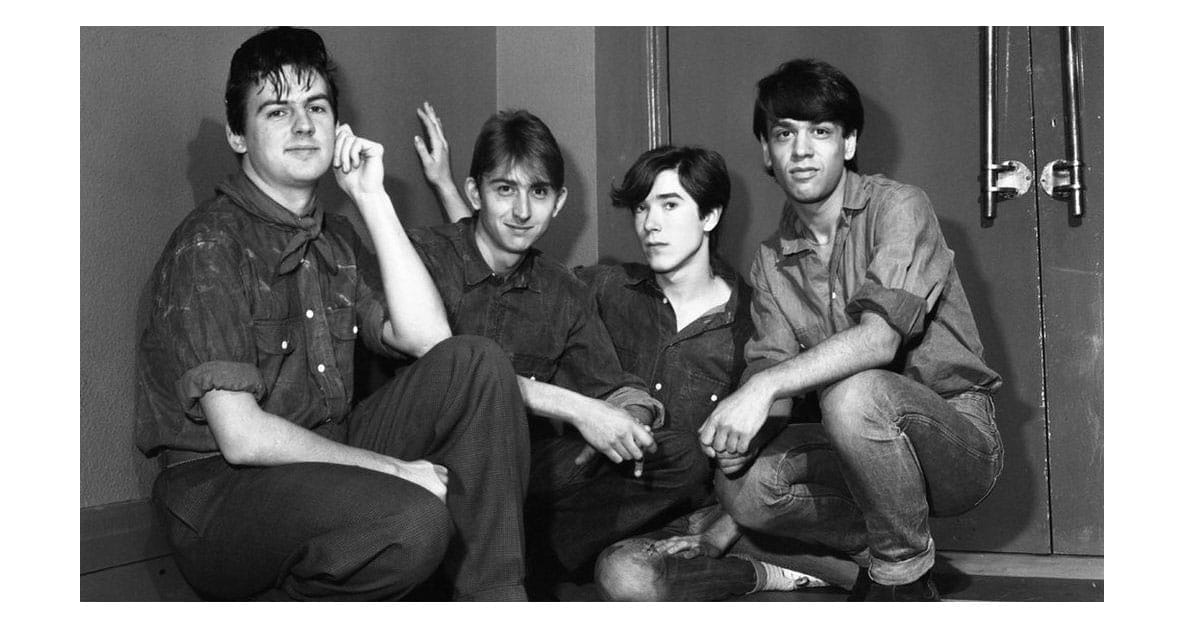
Talk Talk Didn’t Abandon Pop — They Withdrew From It
Talk Talk are often framed as a band that evolved from pop into experimentation. That implies a linear journey, a forward march. What actually happened was more radical.
They didn’t move toward something.
They stepped away.
This wasn’t growth in the usual rock sense. It was retreat as intention — a refusal to keep participating in the communicative contract of pop music.
RMU lens:
Talk Talk chose silence over persuasion.
Reduction as an Ethical Choice
Minimalism in Talk Talk is not stylistic — it’s moral.
Fewer notes to avoid manipulation
Fewer hooks to avoid persuasion
Fewer structures to avoid expectation
They remove anything that feels like guidance. The listener is no longer led, rewarded, or reassured. Music stops functioning as delivery and starts functioning as space.
RMU framing:
What’s removed matters more than what remains.
Time Behaves Differently Here
Talk Talk’s music doesn’t progress — it unfolds.
No clear entry points
No predictable arcs
No rhythmic urgency
Time stretches, collapses, waits. Songs feel less like compositions and more like conditions you enter. This isn’t ambient detachment; it’s attentive stillness.
You’re not distracted.
You’re asked to stay.
Sound as Breath, Not Statement
Every sound in Talk Talk feels fragile, intentional, almost reluctant.
Instruments appear cautiously
Silence is treated as material
Dynamics emerge organically
Nothing announces itself. Nothing competes. The music behaves like breathing — not expressive, not dramatic, simply necessary.
RMU insight:
Talk Talk remove ego from sound without removing presence.
Why This Still Feels Radical
Talk Talk are difficult not because they’re complex, but because they don’t perform for you.
There’s:
No catharsis
No payoff
No emotional framing
In a culture trained to expect immediate response, this feels uncomfortable. The music refuses to justify itself. It exists whether you engage or not.
RMU framing:
Indifference can be more confrontational than noise.
Influence Without Replication
Many artists borrowed Talk Talk’s surface:
space
restraint
atmosphere
Few adopted the underlying discipline: non-assertion.
True Talk Talk–style minimalism requires resisting:
climax
identity
authorship
That’s a high cost. Most listeners — and musicians — don’t want to pay it.
Legacy: Music That Stops Asking
Talk Talk didn’t expand alternative rock.
They emptied it out.
They showed that music could:
withdraw instead of declare
listen instead of speak
exist without needing interpretation
This isn’t evolution.
It’s disengagement as clarity.
RMU Closing Thought
Talk Talk pose one of the most uncomfortable questions in modern music:
What if music didn’t want your attention — only your presence?
They don’t invite.
They don’t insist.
They wait.
And if you stay long enough, you realize something rare:
Meaning doesn’t arrive loudly.
It settles.