
Judas Priest: Speed, Precision, and the Codification of Heavy Metal
Quick Facts
Founded: 1969
Origin: Birmingham, England
Genres: Heavy Metal, Speed Metal
Classic Line-Up: Rob Halford, Glenn Tipton, K.K. Downing, Ian Hill, Dave Holland (earlier: John Hinch, later: Scott Travis)
Years Active: 1969–present
Origin Story – Birmingham’s Second Wave
Judas Priest was formed in Birmingham, the same industrial environment that produced Black Sabbath. However, their musical direction diverged early.
Bassist Ian Hill and guitarist K.K. Downing were central to the early lineup. After several personnel changes, vocalist Rob Halford joined in 1973, bringing a vocal style that would redefine heavy metal frontmanship.
Unlike Sabbath’s darker, slower riff emphasis, Judas Priest moved toward tighter, sharper arrangements. Their early albums, including Rocka Rolla (1974) and Sad Wings of Destiny (1976), blended progressive elements with emerging metal structure.
Sad Wings of Destiny in particular demonstrated ambition. Songs like “Victim of Changes” featured dynamic shifts and high-register vocal intensity.
The band was refining a new version of heavy metal — cleaner, faster, more defined.
The Turning Point – British Steel (1980)
By the late 1970s, Judas Priest had streamlined their approach.
The 1980 album British Steel became their commercial breakthrough.
The record introduced shorter, direct songs built around precise riff construction. Tracks such as:
“Breaking the Law”
“Living After Midnight”
“Metal Gods”
demonstrated economy and focus.
The guitar tone was sharper than earlier heavy metal bands. The production reduced blues influence and emphasized metallic clarity.
Rob Halford’s vocal range — particularly his sustained high notes — became a defining element.
British Steel helped codify heavy metal’s visual and sonic identity.

Milestone Album – Screaming for Vengeance (1982)
While British Steel expanded accessibility, Screaming for Vengeance refined intensity.
Released in 1982, the album balanced melodic structure with speed-driven aggression.
Key tracks include:
“The Hellion / Electric Eye”
“You’ve Got Another Thing Comin’”
“Electric Eye” showcased rapid riff articulation and tight rhythmic synchronization. “You’ve Got Another Thing Comin’” provided a hook-driven anthem that performed strongly in the United States.
The production was polished but forceful. Guitar harmonies were more aggressive than melodic. The album marked their peak in global recognition.
This record positioned Judas Priest as leaders during the rise of 1980s heavy metal.
Signature Song – Breaking the Law
“Breaking the Law” remains one of Judas Priest’s most recognizable tracks.
The riff is direct and repetitive, designed for immediate impact. The structure is concise, avoiding extended instrumental passages.
Lyrically, the song addresses frustration and alienation within modern society. Its simplicity contributed to broad appeal.
Unlike more complex compositions in their catalog, “Breaking the Law” exemplifies structural efficiency.
It became a staple of live performances and a gateway track for new listeners.
Defining the Metal Aesthetic
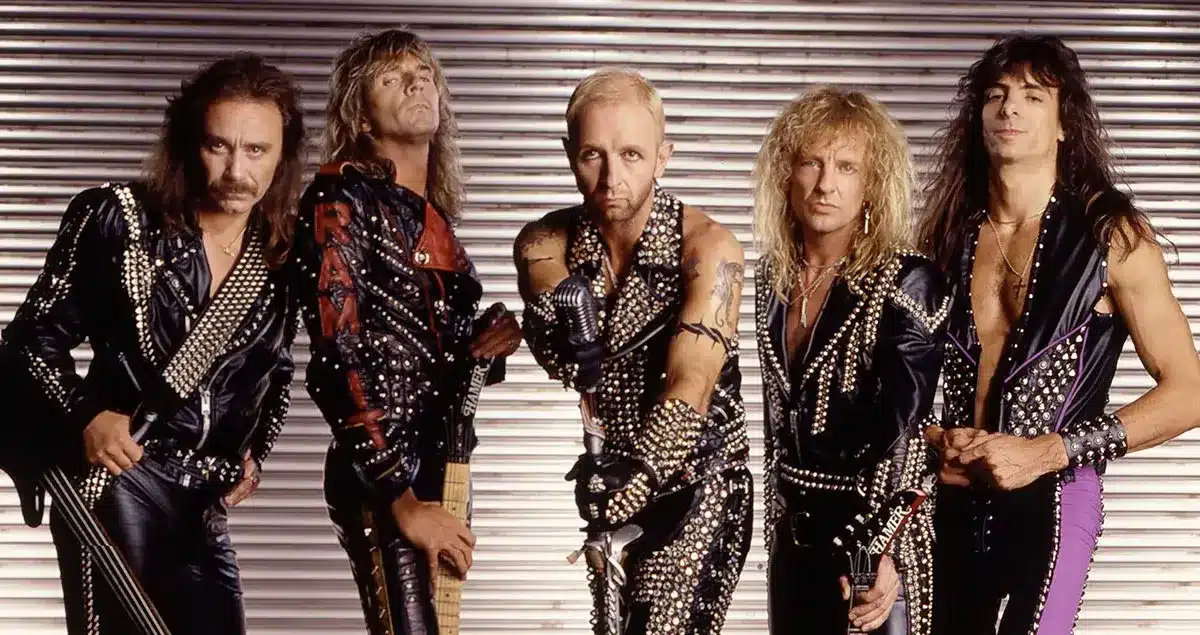
Judas Priest’s influence extended beyond sound.
They standardized several visual elements now associated with heavy metal:
Leather outfits
Studded accessories
Aggressive stage posture
Rob Halford’s stage presence — including his use of a motorcycle entrance during live shows — reinforced the theatrical dimension of metal performance.
While Black Sabbath defined heaviness, Judas Priest refined precision.
They removed blues roots and emphasized metallic sharpness.
Speed and Technical Escalation
Albums like Painkiller (1990) introduced faster tempos and more aggressive drumming with the addition of Scott Travis.
“Painkiller,” the title track, featured rapid double-bass patterns and high-intensity vocal delivery. The album demonstrated adaptability during a period when thrash metal was dominating.
Rather than being eclipsed by faster subgenres, Judas Priest incorporated elements of speed metal while retaining core identity.
Members (Classic Era)
Rob Halford – Vocals
Glenn Tipton – Guitar
K.K. Downing – Guitar
Ian Hill – Bass
Dave Holland – Drums
Scott Travis later became the long-term drummer.
Ian Hill remains the only continuous member since formation.
Selected Studio Discography Highlights
Rocka Rolla (1974)
Sad Wings of Destiny (1976)
British Steel (1980)
Screaming for Vengeance (1982)
Defenders of the Faith (1984)
Painkiller (1990)
Angel of Retribution (2005)
Firepower (2018)
Structural Contribution to Heavy Metal
Judas Priest contributed several core elements to metal’s framework:
Vocal Range Standardization
Halford’s high-register delivery became a template for future metal vocalists.Dual-Guitar Precision
The interplay between Tipton and Downing emphasized synchronized attack over blues improvisation.Visual Identity Formation
Leather-and-studs aesthetics became embedded in metal culture.Tempo Acceleration
Their movement toward faster compositions influenced speed and thrash metal development.
Where Black Sabbath established weight and Iron Maiden expanded narrative structure, Judas Priest refined sharpness and speed.
Legacy
Judas Priest stands as one of heavy metal’s structural architects.
They streamlined the genre, removed excess blues influence, and formalized a cleaner, more metallic sound.
Their influence is audible in speed metal, power metal, and traditional heavy metal movements worldwide.
They did not invent heavy metal.
They defined its edge.