
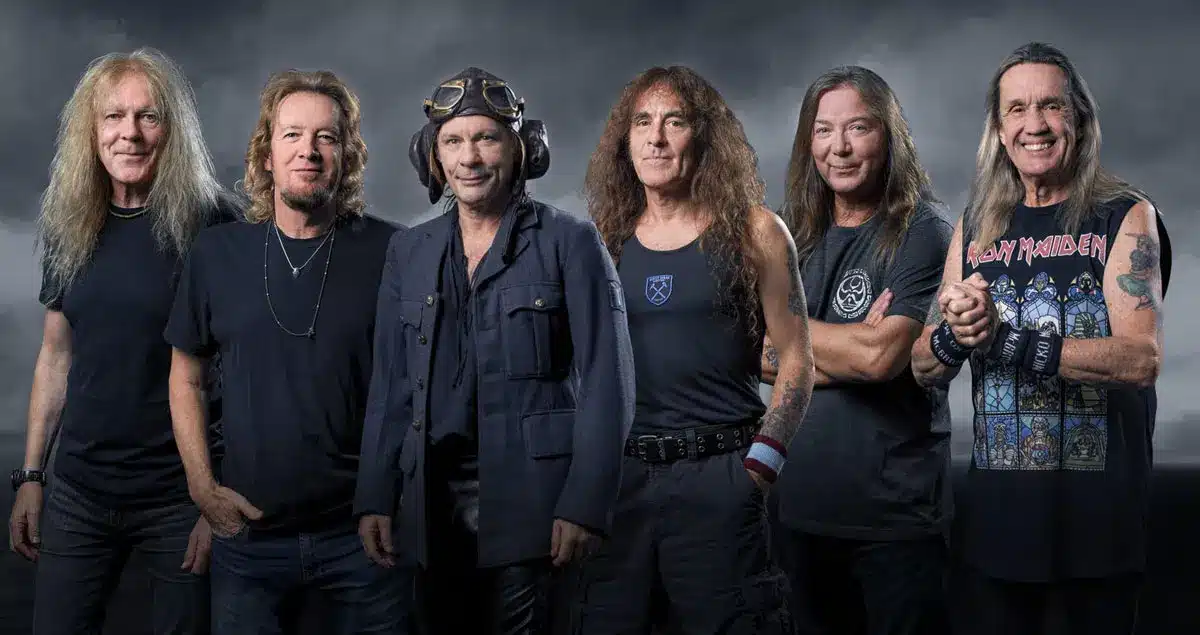
Iron Maiden

Iron Maiden: Structure, Speed, and the Expansion of Heavy Metal Narrative

Quick Facts

Founded: 1975
Origin: London, England
Genres: Heavy Metal, New Wave of British Heavy Metal
Classic Line-Up: Bruce Dickinson, Steve Harris, Dave Murray, Adrian Smith, Nicko McBrain (earlier: Paul Di’Anno, Clive Burr)
Years Active: 1975–present


Origin Story – Steve Harris and the East London Foundation

Iron Maiden was formed in 1975 by bassist Steve Harris. Unlike many bands that emerged collectively, Iron Maiden was built around Harris’s vision.

Growing up in East London, Harris was influenced by progressive rock bands such as Genesis and Jethro Tull as well as harder acts like Deep Purple and Black Sabbath. His songwriting combined melodic bass lines with structured arrangements.

The early years were unstable. Numerous lineup changes occurred before the band recorded its debut. By 1980, Iron Maiden had solidified a working formation with vocalist Paul Di’Anno, guitarists Dave Murray and Dennis Stratton, bassist Harris, and drummer Clive Burr.

Their self-titled debut album, Iron Maiden (1980), became one of the defining releases of the New Wave of British Heavy Metal (NWOBHM). The record emphasized:

  • Fast tempos

  • Twin guitar harmonies

  • Prominent bass movement

  • Direct lyrical themes

However, internal direction soon shifted.


The Turning Point – Bruce Dickinson Joins

In 1981, Paul Di’Anno departed due to internal tension and reliability concerns. He was replaced by Bruce Dickinson, formerly of Samson.

Dickinson’s arrival marked a decisive transition.

His vocal range and theatrical delivery expanded the band’s compositional possibilities. Where Di’Anno’s style was raw and street-oriented, Dickinson brought operatic projection and narrative intensity.

The 1982 album The Number of the Beast became the breakthrough.

It reached number one in the UK and established Iron Maiden internationally. The record balanced aggression with melody, incorporating more complex song structures and historical themes.

From this point forward, Iron Maiden became synonymous with epic storytelling in heavy metal.


Milestone Album – The Number of the Beast (1982)

The Number of the Beast solidified Iron Maiden’s identity.

Key tracks include:

  • “The Number of the Beast”

  • “Run to the Hills”

  • “Hallowed Be Thy Name”

The album refined the twin-guitar dynamic between Dave Murray and Adrian Smith. Harmonized leads became central rather than decorative.

“Hallowed Be Thy Name” demonstrated long-form structure, beginning with clean guitar passages before building into layered solos and dynamic shifts.

Lyrically, the album addressed themes of religion, history, and existential tension. Unlike purely aggressive metal acts, Iron Maiden prioritized narrative coherence.

Commercial success followed, but so did controversy due to the album’s title and imagery. Public backlash inadvertently strengthened their visibility.

This album established Iron Maiden as leaders of the NWOBHM movement.


Signature Song – Hallowed Be Thy Name

“Hallowed Be Thy Name” remains one of the most structurally important songs in their catalog.

The track unfolds in stages:

  • Introductory clean guitar

  • Gradual rhythmic build

  • Accelerated twin-guitar harmonies

  • Extended solo sections

The lyrics portray a condemned prisoner reflecting before execution. The narrative perspective adds psychological depth rarely emphasized in early 1980s metal.

Rather than relying solely on speed, the song builds tension through progression and dynamic pacing.

It became a consistent highlight of live performances and a defining example of Iron Maiden’s structural approach.


Expansion – Piece of Mind and Powerslave

With Nicko McBrain replacing Clive Burr on drums in 1983, Iron Maiden entered a period of sustained consistency.

Albums such as Piece of Mind (1983) and Powerslave (1984) expanded historical and literary themes. “The Trooper” drew from the Crimean War. “Rime of the Ancient Mariner” adapted Samuel Taylor Coleridge’s poem into a 13-minute composition.

The band embraced complexity without abandoning accessibility.

Their live performances during the mid-1980s reinforced their global presence. Elaborate stage designs, including the recurring mascot Eddie, strengthened brand identity.

Iron Maiden balanced musicianship with theatrical presentation.


Line-Up Changes and Continuity

Adrian Smith departed in 1990 and was replaced by Janick Gers. In 1993, Bruce Dickinson left the band to pursue solo work. Blaze Bayley assumed vocal duties during the mid-1990s.

Although albums like The X Factor and Virtual XI maintained structural integrity, commercial momentum slowed.

In 1999, Dickinson and Smith returned.

Rather than reducing personnel, the band retained Janick Gers, creating a three-guitar lineup.

This configuration became a defining modern-era characteristic.


Members (Core Era)

Bruce Dickinson – Vocals
Steve Harris – Bass
Dave Murray – Guitar
Adrian Smith – Guitar
Janick Gers – Guitar
Nicko McBrain – Drums

Steve Harris remains the founding and central creative force.


Selected Studio Discography Highlights

Iron Maiden (1980)
Killers (1981)
The Number of the Beast (1982)
Piece of Mind (1983)
Powerslave (1984)
Somewhere in Time (1986)
Seventh Son of a Seventh Son (1988)
Brave New World (2000)
A Matter of Life and Death (2006)
The Book of Souls (2015)
Senjutsu (2021)


Structural Contribution to Heavy Metal

Iron Maiden contributed several foundational elements:

  1. Twin-Guitar Harmony Standardization
    Harmonized leads became a central metal convention.

  2. Narrative and Historical Themes
    Their lyrical focus expanded metal beyond rebellion into storytelling.

  3. Melodic Integration with Speed
    They balanced aggressive tempo with memorable melodic structure.

  4. Brand Consistency
    The use of recurring visual elements strengthened long-term identity.

Unlike darker, riff-centric metal bands, Iron Maiden emphasized clarity and compositional discipline.


Legacy

Iron Maiden stands as one of the most durable heavy metal institutions.

They maintained stylistic consistency while adapting to industry shifts. Their influence extends into power metal, speed metal, and modern melodic metal movements.

Their impact is not rooted in extremity.

It lies in structure — precise arrangements, harmonized leads, and narrative focus.

Iron Maiden did not merely participate in the New Wave of British Heavy Metal.

They defined its standard.

Iron Maiden

Iron Maiden: Yapı, Hız ve Heavy Metal Anlatısının Genişlemesi

Hızlı Bilgiler

Kuruluş: 1975
Köken: Londra, İngiltere
Türler: Heavy Metal, Yeni Dalga Britanya Heavy Metal
Klasik Kadro: Bruce Dickinson, Steve Harris, Dave Murray, Adrian Smith, Nicko McBrain (önceki: Paul Di’Anno, Clive Burr)
Faaliyet Yılları: 1975–günümüz


Köken Hikayesi – Steve Harris ve Doğu Londra Temeli

Iron Maiden, 1975 yılında basçı Steve Harris tarafından kuruldu. Birçok grubun kolektif olarak ortaya çıkmasının aksine, Iron Maiden Harris’in vizyonu etrafında inşa edildi.

Doğu Londra’da büyüyen Harris, Genesis ve Jethro Tull gibi progresif rock gruplarından ve Deep Purple ile Black Sabbath gibi daha sert gruplardan etkilendi. Şarkı yazımı, melodik bas hatlarını yapılandırılmış düzenlemelerle birleştirdi.

İlk yıllar istikrarsızdı. Grup, ilk albümünü kaydetmeden önce birçok kadro değişikliği yaşadı. 1980 yılına gelindiğinde, Iron Maiden vokalist Paul Di’Anno, gitaristler Dave Murray ve Dennis Stratton, basçı Harris ve davulcu Clive Burr ile çalışan bir formasyon oluşturmuştu.

Kendilerine adını verdikleri ilk albümleri, Iron Maiden (1980), Yeni Dalga Britanya Heavy Metal (NWOBHM) akımının tanımlayıcı yayınlarından biri haline geldi. Kayıt, şunları vurguladı:

  • Hızlı tempolar

  • İkili gitar armonileri

  • Belirgin bas hareketi

  • Doğrudan lirik temalar

Ancak, iç yönelim kısa sürede değişti.


Dönüm Noktası – Bruce Dickinson’un Katılması

1981 yılında, Paul Di’Anno iç gerginlikler ve güvenilirlik endişeleri nedeniyle gruptan ayrıldı. Yerine daha önce Samson’da yer alan Bruce Dickinson geçti.

Dickinson’un gelişi belirleyici bir geçişi işaret etti.

Onun vokal aralığı ve tiyatral sunumu, grubun besteleme olanaklarını genişletti. Di’Anno’nun tarzı ham ve sokak odaklıyken, Dickinson operatik bir projeksiyon ve anlatı yoğunluğu getirdi.

1982 albümü The Number of the Beast büyük bir çıkış yaptı.

Albüm, Birleşik Krallık’ta bir numara oldu ve Iron Maiden’ı uluslararası alanda tanıttı. Kayıt, agresyon ile melodi arasında bir denge kurarak daha karmaşık şarkı yapıları ve tarihi temalar içeriyordu.

Bu noktadan itibaren, Iron Maiden epik hikaye anlatımı ile heavy metalin özdeşleşti.


Dönüm Noktası Albümü – The Number of the Beast (1982)

The Number of the Beast, Iron Maiden’ın kimliğini pekiştirdi.

Ana parçalar şunlardır:

  • “The Number of the Beast”

  • “Run to the Hills”

  • “Hallowed Be Thy Name”

Albüm, Dave Murray ve Adrian Smith arasındaki ikili gitar dinamiğini geliştirdi. Armonize edilen sololar, dekoratif olmaktan çok merkezi hale geldi.

“Hallowed Be Thy Name”, temiz gitar pasajlarıyla başlayarak katmanlı sololar ve dinamik değişimlere dönüşen uzun biçim yapısını gösterdi.

Lirik olarak, albüm din, tarih ve varoluşsal gerginlik temalarını ele aldı. Tamamen agresif metal gruplarının aksine, Iron Maiden anlatı tutarlılığını önceliklendirdi.

Ticari başarı geldi, ancak albümün başlığı ve görselleri nedeniyle tartışmalar da yaşandı. Kamu tepkisi, istemeden de olsa görünürlüklerini artırdı.

Bu albüm, Iron Maiden’ı NWOBHM hareketinin liderleri olarak kurdu.


İmza Şarkısı – Hallowed Be Thy Name

“Hallowed Be Thy Name”, kataloglarındaki en yapısal olarak önemli şarkılardan biri olmaya devam ediyor.

Parça aşamalı olarak gelişiyor:

  • Tanıtıcı temiz gitar

  • Aşamalı ritmik yükseliş

  • Hızlandırılmış ikili gitar armonileri

  • Uzun solo bölümleri

Sözler, idam öncesinde düşünen bir mahkumu tasvir ediyor. Anlatı perspektifi, 1980’lerin başındaki metalde nadiren vurgulanan psikolojik derinlik katıyor.

Şarkı yalnızca hıza dayanmak yerine, ilerleme ve dinamik tempoyla gerilim oluşturuyor.

Canlı performansların sürekli bir vurgusu haline geldi ve Iron Maiden’ın yapısal yaklaşımının belirleyici bir örneği oldu.


Genişleme – Piece of Mind ve Powerslave

Nicko McBrain, 1983 yılında Clive Burr’ın yerine davulda yer aldığında, Iron Maiden sürdürülebilir bir tutarlılık dönemine girdi.

Piece of Mind (1983) ve Powerslave (1984) gibi albümler, tarihi ve edebi temaları genişletti. “The Trooper”, Kırım Savaşı’ndan esinlendi. “Rime of the Ancient Mariner”, Samuel Taylor Coleridge’in şiirini 13 dakikalık bir kompozisyona dönüştürdü.

Grup, erişilebilirliği terk etmeden karmaşıklığı benimsedi.

1980’lerin ortalarındaki canlı performansları, küresel varlıklarını pekiştirdi. Tekrar eden maskot Eddie de dahil olmak üzere karmaşık sahne tasarımları, marka kimliğini güçlendirdi.

Iron Maiden, müzikaliteyi tiyatral sunumla dengeledi.


Kadrodaki Değişiklikler ve Süreklilik

Adrian Smith, 1990 yılında gruptan ayrıldı ve yerine Janick Gers geçti. 1993 yılında, Bruce Dickinson solo çalışmalara yönelmek için gruptan ayrıldı. Blaze Bayley, 1990’ların ortalarında vokal görevlerini üstlendi.

The X Factor ve Virtual XI gibi albümler yapısal bütünlüğü korusa da, ticari ivme yavaşladı.

1999 yılında, Dickinson ve Smith geri döndü.

Grup, personeli azaltmak yerine Janick Gers’i koruyarak üç gitaristli bir kadro oluşturdu.

Bu yapı, modern dönemin belirleyici bir özelliği haline geldi.


Üyeler (Temel Dönem)

Bruce Dickinson – Vokal
Steve Harris – Bas
Dave Murray – Gitar
Adrian Smith – Gitar
Janick Gers – Gitar
Nicko McBrain – Davul

Steve Harris, kurucu ve merkezi yaratıcı güç olmaya devam ediyor.


Seçilen Stüdyo Diskografisi Öne Çıkanlar

Iron Maiden (1980)
Killers (1981)
The Number of the Beast (1982)
Piece of Mind (1983)
Powerslave (1984)
Somewhere in Time (1986)
Seventh Son of a Seventh Son (1988)
Brave New World (2000)
A Matter of Life and Death (2006)
The Book of Souls (2015)
Senjutsu (2021)


Heavy Metal’e Yapısal Katkı

Iron Maiden, birkaç temel unsur katkıda bulundu:

  1. İkili Gitar Armonisi Standartlaştırması
    Harmonize edilen sololar, merkezi bir metal geleneği haline geldi.

  2. Anlatı ve Tarihi Temalar
    Lirik odakları, metal müziği isyanın ötesine taşıyarak hikaye anlatımına yönlendirdi.

  3. Melodik Entegrasyon ile Hız
    Agresif tempoyu, akılda kalıcı melodik yapı ile dengelediler.

  4. Marka Tutarlılığı
    Tekrar eden görsel unsurların kullanımı, uzun vadeli kimliği güçlendirdi.

Daha karanlık, riff merkezli metal gruplarının aksine, Iron Maiden netlik ve besteleme disiplinini vurguladı.


Miras

Iron Maiden, en dayanıklı heavy metal kurumlarından biri olarak duruyor.

Stilistik tutarlılıklarını korurken, endüstri değişimlerine uyum sağladılar. Etkileri, power metal, speed metal ve modern melodik metal hareketlerine kadar uzanıyor.

Etkileri, aşırılıkta köklenmiyor.

Yapıda yatıyor — kesin düzenlemeler, harmonize edilmiş sololar ve anlatı odaklılık.

Iron Maiden, yalnızca Yeni Dalga Britanya Heavy Metal akımına katılmadı.

Onlar, onun standartlarını tanımladı.

Iron Maiden

Iron Maiden : Structure, Vitesse et l’Expansion du Récit du Heavy Metal

Faits Rapides

Fondé : 1975
Origine : Londres, Angleterre
Genres : Heavy Metal, New Wave of British Heavy Metal
Formation Classique : Bruce Dickinson, Steve Harris, Dave Murray, Adrian Smith, Nicko McBrain (auparavant : Paul Di’Anno, Clive Burr)
Années Actives : 1975–présent


Histoire d’Origine – Steve Harris et la Fondation de l’Est Londonien

Iron Maiden a été formé en 1975 par le bassiste Steve Harris. Contrairement à de nombreux groupes qui ont émergé collectivement, Iron Maiden a été construit autour de la vision de Harris.

En grandissant dans l’Est de Londres, Harris a été influencé par des groupes de rock progressif tels que Genesis et Jethro Tull ainsi que par des groupes plus durs comme Deep Purple et Black Sabbath. Son écriture combinait des lignes de basse mélodiques avec des arrangements structurés.

Les premières années étaient instables. De nombreux changements de formation ont eu lieu avant que le groupe n’enregistre son premier album. En 1980, Iron Maiden avait solidifié une formation de travail avec le chanteur Paul Di’Anno, les guitaristes Dave Murray et Dennis Stratton, le bassiste Harris et le batteur Clive Burr.

Leur premier album éponyme, Iron Maiden (1980), est devenu l’une des sorties définissant la New Wave of British Heavy Metal (NWOBHM). Le disque mettait l’accent sur :

  • Tempos rapides

  • Harmonies de guitare jumelées

  • Mouvement de basse proéminent

  • Thèmes lyriques directs

Cependant, la direction interne a rapidement changé.


Le Tournant – Bruce Dickinson Rejoint

En 1981, Paul Di’Anno est parti en raison de tensions internes et de préoccupations concernant sa fiabilité. Il a été remplacé par Bruce Dickinson, ancien membre de Samson.

L’arrivée de Dickinson a marqué une transition décisive.

Son registre vocal et sa livraison théâtrale ont élargi les possibilités compositionnelles du groupe. Là où le style de Di’Anno était brut et orienté vers la rue, Dickinson a apporté une projection opératique et une intensité narrative.

L’album de 1982 The Number of the Beast est devenu le point de rupture.

Il a atteint la première place au Royaume-Uni et a établi Iron Maiden à l’international. Le disque a équilibré agressivité et mélodie, incorporant des structures de chansons plus complexes et des thèmes historiques.

À partir de ce moment, Iron Maiden est devenu synonyme de narration épique dans le heavy metal.


Album Marquant – The Number of the Beast (1982)

The Number of the Beast a solidifié l’identité d’Iron Maiden.

Les morceaux clés incluent :

  • “The Number of the Beast”

  • “Run to the Hills”

  • “Hallowed Be Thy Name”

L’album a affiné la dynamique de guitare jumelée entre Dave Murray et Adrian Smith. Les leads harmonisés sont devenus centraux plutôt que décoratifs.

“Hallowed Be Thy Name” a démontré une structure longue, commençant par des passages de guitare claire avant de se construire en solos superposés et en changements dynamiques.

Lyricalement, l’album abordait des thèmes de religion, d’histoire et de tension existentielle. Contrairement aux groupes de metal purement agressifs, Iron Maiden a donné la priorité à la cohérence narrative.

Le succès commercial a suivi, mais la controverse aussi en raison du titre et des images de l’album. La réaction du public a involontairement renforcé leur visibilité.

Cet album a établi Iron Maiden comme des leaders du mouvement NWOBHM.


Chanson Signature – Hallowed Be Thy Name

“Hallowed Be Thy Name” reste l’une des chansons les plus structurellement importantes de leur catalogue.

Le morceau se déroule en étapes :

  • Guitare claire d’introduction

  • Construction rythmique progressive

  • Harmonies de guitare jumelées accélérées

  • Sections de solo étendues

Les paroles décrivent un prisonnier condamné réfléchissant avant son exécution. La perspective narrative ajoute une profondeur psychologique rarement soulignée dans le metal du début des années 1980.

Plutôt que de s’appuyer uniquement sur la vitesse, la chanson construit la tension à travers la progression et le rythme dynamique.

Elle est devenue un point fort constant des performances en direct et un exemple déterminant de l’approche structurelle d’Iron Maiden.


Expansion – Piece of Mind et Powerslave

Avec Nicko McBrain remplaçant Clive Burr à la batterie en 1983, Iron Maiden est entré dans une période de cohérence soutenue.

Des albums tels que Piece of Mind (1983) et Powerslave (1984) ont élargi les thèmes historiques et littéraires. “The Trooper” s’inspire de la guerre de Crimée. “Rime of the Ancient Mariner” a adapté le poème de Samuel Taylor Coleridge en une composition de 13 minutes.

Le groupe a embrassé la complexité sans abandonner l’accessibilité.

Leurs performances en direct au milieu des années 1980 ont renforcé leur présence mondiale. Des décors de scène élaborés, y compris la mascotte récurrente Eddie, ont renforcé l’identité de la marque.

Iron Maiden a équilibré la musicalité avec la présentation théâtrale.


Changements de Formation et Continuité

Adrian Smith est parti en 1990 et a été remplacé par Janick Gers. En 1993, Bruce Dickinson a quitté le groupe pour poursuivre une carrière solo. Blaze Bayley a assumé les fonctions vocales au milieu des années 1990.

Bien que des albums comme The X Factor et Virtual XI aient maintenu l’intégrité structurelle, l’élan commercial a ralenti.

En 1999, Dickinson et Smith sont revenus.

Plutôt que de réduire le personnel, le groupe a conservé Janick Gers, créant une formation à trois guitares.

Cette configuration est devenue une caractéristique déterminante de l’ère moderne.


Membres (Époque Centrale)

Bruce Dickinson – Vocals
Steve Harris – Basse
Dave Murray – Guitare
Adrian Smith – Guitare
Janick Gers – Guitare
Nicko McBrain – Batterie

Steve Harris reste la force créative fondatrice et centrale.


Points Forts Sélectionnés de la Discographie Studio

Iron Maiden (1980)
Killers (1981)
The Number of the Beast (1982)
Piece of Mind (1983)
Powerslave (1984)
Somewhere in Time (1986)
Seventh Son of a Seventh Son (1988)
Brave New World (2000)
A Matter of Life and Death (2006)
The Book of Souls (2015)
Senjutsu (2021)


Contribution Structurelle au Heavy Metal

Iron Maiden a contribué plusieurs éléments fondamentaux :

  1. Standardisation de l’Harmonie à Deux Guitares
    Les leads harmonisés sont devenus une convention centrale du metal.

  2. Thèmes Narratifs et Historiques
    Leur focus lyrique a élargi le metal au-delà de la rébellion vers la narration.

  3. Intégration Mélodique avec Vitesse
    Ils ont équilibré un tempo agressif avec une structure mélodique mémorable.

  4. Cohérence de Marque
    L’utilisation d’éléments visuels récurrents a renforcé l’identité à long terme.

Contrairement aux groupes de metal plus sombres et centrés sur les riffs, Iron Maiden a mis l’accent sur la clarté et la discipline compositionnelle.


Héritage

Iron Maiden se dresse comme l’une des institutions de heavy metal les plus durables.

Ils ont maintenu une cohérence stylistique tout en s’adaptant aux changements de l’industrie. Leur influence s’étend au power metal, speed metal et aux mouvements de metal mélodique moderne.

Leur impact n’est pas ancré dans l’extrême.

Il réside dans la structure — des arrangements précis, des leads harmonisés et un focus narratif.

Iron Maiden n’a pas simplement participé à la New Wave of British Heavy Metal.

Ils ont défini sa norme.

Iron Maiden

Iron Maiden: Structuur, Snelheid en de Uitbreiding van het Heavy Metal Narratief

Feiten

Opgericht: 1975
Oorsprong: Londen, Engeland
Genres: Heavy Metal, New Wave of British Heavy Metal
Classic Line-Up: Bruce Dickinson, Steve Harris, Dave Murray, Adrian Smith, Nicko McBrain (eerder: Paul Di’Anno, Clive Burr)
Actieve Jaren: 1975–heden


Oorsprongsverhaal – Steve Harris en de Oost-Londense Basis

Iron Maiden werd in 1975 opgericht door bassist Steve Harris. In tegenstelling tot veel bands die collectief ontstonden, was Iron Maiden opgebouwd rond Harris’s visie.

Opgegroeid in Oost-Londen, werd Harris beïnvloed door progressieve rockbands zoals Genesis en Jethro Tull, evenals hardere acts zoals Deep Purple en Black Sabbath. Zijn songwriting combineerde melodische baslijnen met gestructureerde arrangementen.

De vroege jaren waren onstabiel. Talrijke line-up veranderingen vonden plaats voordat de band haar debuut opnam. Tegen 1980 had Iron Maiden een werkbare formatie vastgelegd met zanger Paul Di’Anno, gitaristen Dave Murray en Dennis Stratton, bassist Harris en drummer Clive Burr.

Hun zelfgetitelde debuutalbum, Iron Maiden (1980), werd een van de bepalende releases van de New Wave of British Heavy Metal (NWOBHM). De plaat benadrukte:

  • Snelle tempo’s

  • Dubbele gitaarharmonieën

  • Prominente basbeweging

  • Directe lyrische thema’s

Echter, de interne richting verschoof al snel.


Het Keerpunt – Bruce Dickinson Sluit Aan

In 1981 vertrok Paul Di’Anno vanwege interne spanningen en betrouwbaarheidsoverwegingen. Hij werd vervangen door Bruce Dickinson, voorheen van Samson.

De komst van Dickinson markeerde een beslissende overgang.

Zijn vocale bereik en theatrale presentatie breidden de compositieve mogelijkheden van de band uit. Waar Di’Anno’s stijl rauw en straatgericht was, bracht Dickinson operatische projectie en narratieve intensiteit.

Het album uit 1982 The Number of the Beast werd de doorbraak.

Het bereikte nummer één in het VK en vestigde Iron Maiden internationaal. De plaat balanceerde agressie met melodie, en incorporateerde complexere songstructuren en historische thema’s.

Vanaf dat moment werd Iron Maiden synoniem met episch vertellen in heavy metal.


Mijlpaal Album – The Number of the Beast (1982)

The Number of the Beast verstevigde de identiteit van Iron Maiden.

Belangrijke nummers zijn onder andere:

  • “The Number of the Beast”

  • “Run to the Hills”

  • “Hallowed Be Thy Name”

Het album verfijnde de dynamiek van de dubbele gitaar tussen Dave Murray en Adrian Smith. Geharmoniseerde leads werden centraal in plaats van decoratief.

“Hallowed Be Thy Name” demonstreerde een lange structuur, beginnend met schone gitaarpassages voordat het opbouwde naar gelaagde solo’s en dynamische verschuivingen.

Lyrisch gezien behandelde het album thema’s van religie, geschiedenis en existentiële spanning. In tegenstelling tot puur agressieve metalacts, gaf Iron Maiden prioriteit aan narratieve samenhang.

Commercieel succes volgde, maar ook controverse vanwege de titel en beelden van het album. Publieke tegenreactie versterkte onbedoeld hun zichtbaarheid.

Dit album vestigde Iron Maiden als leiders van de NWOBHM-beweging.


Handtekening Nummer – Hallowed Be Thy Name

“Hallowed Be Thy Name” blijft een van de meest structureel belangrijke nummers in hun catalogus.

Het nummer ontvouwt zich in fasen:

  • Inleidende schone gitaar

  • Geleidelijke ritmische opbouw

  • Versnelde dubbele gitaarharmonieën

  • Uitgebreide solo-secties

De teksten portretteren een veroordeelde gevangene die reflecteert voor de executie. Het narratieve perspectief voegt psychologische diepte toe die zelden werd benadrukt in de metal van de vroege jaren ’80.

In plaats van uitsluitend op snelheid te vertrouwen, bouwt het nummer spanning op door progressie en dynamische pacing.

Het werd een constante hoogtepunten van live optredens en een bepalend voorbeeld van Iron Maiden’s structurele benadering.


Uitbreiding – Piece of Mind en Powerslave

Met Nicko McBrain die Clive Burr op drums verving in 1983, ging Iron Maiden een periode van voortdurende consistentie binnen.

Albums zoals Piece of Mind (1983) en Powerslave (1984) breidden historische en literaire thema’s uit. “The Trooper” putte uit de Krimoorlog. “Rime of the Ancient Mariner” paste het gedicht van Samuel Taylor Coleridge aan in een compositie van 13 minuten.

De band omarmde complexiteit zonder toegankelijkheid op te geven.

Hun live optredens in het midden van de jaren ’80 versterkten hun wereldwijde aanwezigheid. Uitgebreide podiumontwerpen, inclusief de terugkerende mascotte Eddie, versterkten de merkidentiteit.

Iron Maiden balanceerde muzikantschap met theatrale presentatie.


Line-Up Veranderingen en Continuïteit

Adrian Smith vertrok in 1990 en werd vervangen door Janick Gers. In 1993 verliet Bruce Dickinson de band om solo werk te doen. Blaze Bayley nam de vocale taken op zich tijdens het midden van de jaren ’90.

Hoewel albums zoals The X Factor en Virtual XI de structurele integriteit behielden, vertraagde de commerciële momentum.

In 1999 keerden Dickinson en Smith terug.

In plaats van het aantal leden te verminderen, behield de band Janick Gers, waardoor een drie-gitaar line-up ontstond.

Deze configuratie werd een bepalend kenmerk van het moderne tijdperk.


Leden (Kernperiode)

Bruce Dickinson – Zang
Steve Harris – Bas
Dave Murray – Gitaar
Adrian Smith – Gitaar
Janick Gers – Gitaar
Nicko McBrain – Drums

Steve Harris blijft de oprichtende en centrale creatieve kracht.


Geselecteerde Hoogtepunten uit de Studio Discografie

Iron Maiden (1980)
Killers (1981)
The Number of the Beast (1982)
Piece of Mind (1983)
Powerslave (1984)
Somewhere in Time (1986)
Seventh Son of a Seventh Son (1988)
Brave New World (2000)
A Matter of Life and Death (2006)
The Book of Souls (2015)
Senjutsu (2021)


Structurele Bijdrage aan Heavy Metal

Iron Maiden droeg verschillende fundamentele elementen bij:

  1. Standaardisatie van Dubbele Gitaarharmonie
    Gecombineerde leads werden een centrale metalconventie.

  2. Narratieve en Historische Thema’s
    Hun lyrische focus breidde metal uit van rebellie naar storytelling.

  3. Melodische Integratie met Snelheid
    Ze balanceerden agressief tempo met memorabele melodische structuren.

  4. Merkconsistentie
    Het gebruik van terugkerende visuele elementen versterkte de langetermijnidentiteit.

In tegenstelling tot donkerdere, riff-gecentreerde metalbands, benadrukte Iron Maiden helderheid en compositiediscipline.


Erfenis

Iron Maiden staat als een van de meest duurzame heavy metal instellingen.

Ze behielden stilistische consistentie terwijl ze zich aanpasten aan veranderingen in de industrie. Hun invloed strekt zich uit tot power metal, speed metal en moderne melodische metalbewegingen.

Hun impact is niet geworteld in extremiteit.

Het ligt in structuur — precieze arrangementen, harmonized leads en narratieve focus.

Iron Maiden nam niet alleen deel aan de New Wave of British Heavy Metal.

Ze definieerden de standaard.

Iron Maiden

Iron Maiden: Estructura, Velocidad y la Expansión de la Narrativa del Heavy Metal

Datos Rápidos

Fundada: 1975
Origen: Londres, Inglaterra
Géneros: Heavy Metal, Nueva Ola del Heavy Metal Británico
Formación Clásica: Bruce Dickinson, Steve Harris, Dave Murray, Adrian Smith, Nicko McBrain (anteriormente: Paul Di’Anno, Clive Burr)
Años Activos: 1975–presente


Historia de Origen – Steve Harris y la Fundación del Este de Londres

Iron Maiden fue formada en 1975 por el bajista Steve Harris. A diferencia de muchas bandas que surgieron colectivamente, Iron Maiden se construyó en torno a la visión de Harris.

Creciendo en el Este de Londres, Harris fue influenciado por bandas de rock progresivo como Genesis y Jethro Tull, así como por actos más duros como Deep Purple y Black Sabbath. Su composición combinó líneas de bajo melódicas con arreglos estructurados.

Los primeros años fueron inestables. Ocurrieron numerosos cambios de formación antes de que la banda grabara su debut. Para 1980, Iron Maiden había solidificado una formación de trabajo con el vocalista Paul Di’Anno, los guitarristas Dave Murray y Dennis Stratton, el bajista Harris y el baterista Clive Burr.

Su álbum debut homónimo, Iron Maiden (1980), se convirtió en uno de los lanzamientos definitorios de la Nueva Ola del Heavy Metal Británico (NWOBHM). El disco enfatizó:

  • Tempos rápidos

  • Armonías de guitarra gemelas

  • Movimiento de bajo prominente

  • Temas líricos directos

Sin embargo, la dirección interna pronto cambió.


El Punto de Inflexión – Bruce Dickinson se Une

En 1981, Paul Di’Anno se fue debido a tensiones internas y preocupaciones de fiabilidad. Fue reemplazado por Bruce Dickinson, anteriormente de Samson.

La llegada de Dickinson marcó una transición decisiva.

Su rango vocal y entrega teatral expandieron las posibilidades compositivas de la banda. Donde el estilo de Di’Anno era crudo y orientado a la calle, Dickinson trajo proyección operística e intensidad narrativa.

El álbum de 1982 The Number of the Beast se convirtió en el gran avance.

Alcanzó el número uno en el Reino Unido y estableció a Iron Maiden internacionalmente. El disco equilibró agresión con melodía, incorporando estructuras de canciones más complejas y temas históricos.

A partir de este momento, Iron Maiden se convirtió en sinónimo de narración épica en el heavy metal.


Álbum Hito – The Number of the Beast (1982)

The Number of the Beast solidificó la identidad de Iron Maiden.

Las pistas clave incluyen:

  • “The Number of the Beast”

  • “Run to the Hills”

  • “Hallowed Be Thy Name”

El álbum refinó la dinámica de guitarra gemela entre Dave Murray y Adrian Smith. Los solos armonizados se convirtieron en centrales en lugar de decorativos.

“Hallowed Be Thy Name” demostró una estructura de forma larga, comenzando con pasajes de guitarra limpia antes de construir en solos en capas y cambios dinámicos.

Líricamente, el álbum abordó temas de religión, historia y tensión existencial. A diferencia de los actos de metal puramente agresivos, Iron Maiden priorizó la coherencia narrativa.

El éxito comercial siguió, pero también la controversia debido al título y la imaginería del álbum. La reacción pública fortaleció inadvertidamente su visibilidad.

Este álbum estableció a Iron Maiden como líderes del movimiento NWOBHM.


Canción Emblemática – Hallowed Be Thy Name

“Hallowed Be Thy Name” sigue siendo una de las canciones más estructuralmente importantes en su catálogo.

La pista se desarrolla en etapas:

  • Guitarra limpia introductoria

  • Construcción rítmica gradual

  • Armonías de guitarra gemela aceleradas

  • Secciones de solo extendidas

Las letras retratan a un prisionero condenado reflexionando antes de la ejecución. La perspectiva narrativa añade profundidad psicológica rara vez enfatizada en el metal de principios de los 80.

En lugar de depender únicamente de la velocidad, la canción construye tensión a través de la progresión y el ritmo dinámico.

Se convirtió en un punto culminante constante de las presentaciones en vivo y un ejemplo definitorio del enfoque estructural de Iron Maiden.


Expansión – Piece of Mind y Powerslave

Con Nicko McBrain reemplazando a Clive Burr en la batería en 1983, Iron Maiden entró en un período de consistencia sostenida.

Álbumes como Piece of Mind (1983) y Powerslave (1984) expandieron temas históricos y literarios. “The Trooper” se inspiró en la Guerra de Crimea. “Rime of the Ancient Mariner” adaptó el poema de Samuel Taylor Coleridge en una composición de 13 minutos.

La banda abrazó la complejidad sin abandonar la accesibilidad.

Sus presentaciones en vivo durante mediados de los 80 reforzaron su presencia global. Diseños de escenario elaborados, incluyendo la mascota recurrente Eddie, fortalecieron la identidad de la marca.

Iron Maiden equilibró la musicalidad con la presentación teatral.


Cambios de Formación y Continuidad

Adrian Smith se fue en 1990 y fue reemplazado por Janick Gers. En 1993, Bruce Dickinson dejó la banda para seguir una carrera en solitario. Blaze Bayley asumió las funciones vocales durante mediados de los 90.

Aunque álbumes como The X Factor y Virtual XI mantuvieron la integridad estructural, el impulso comercial se desaceleró.

En 1999, Dickinson y Smith regresaron.

En lugar de reducir el personal, la banda retuvo a Janick Gers, creando una formación de tres guitarras.

Esta configuración se convirtió en una característica definitoria de la era moderna.


Miembros (Era Central)

Bruce Dickinson – Voces
Steve Harris – Bajo
Dave Murray – Guitarra
Adrian Smith – Guitarra
Janick Gers – Guitarra
Nicko McBrain – Batería

Steve Harris sigue siendo la fuerza creativa fundadora y central.


Destacados Seleccionados de la Discografía de Estudio

Iron Maiden (1980)
Killers (1981)
The Number of the Beast (1982)
Piece of Mind (1983)
Powerslave (1984)
Somewhere in Time (1986)
Seventh Son of a Seventh Son (1988)
Brave New World (2000)
A Matter of Life and Death (2006)
The Book of Souls (2015)
Senjutsu (2021)


Contribución Estructural al Heavy Metal

Iron Maiden contribuyó con varios elementos fundamentales:

  1. Estandarización de la Armonía de Guitarras Gemelas
    Los solos armonizados se convirtieron en una convención central del metal.

  2. Temas Narrativos e Históricos
    Su enfoque lírico expandió el metal más allá de la rebelión hacia la narración.

  3. Integración Melódica con Velocidad
    Equilibraron el tempo agresivo con una estructura melódica memorable.

  4. Consistencia de Marca
    El uso de elementos visuales recurrentes fortaleció la identidad a largo plazo.

A diferencia de las bandas de metal más oscuras y centradas en riffs, Iron Maiden enfatizó la claridad y la disciplina compositiva.


Legado

Iron Maiden se erige como una de las instituciones de heavy metal más duraderas.

Mantuvieron una consistencia estilística mientras se adaptaban a los cambios de la industria. Su influencia se extiende al power metal, speed metal y movimientos de metal melódico moderno.

Su impacto no se basa en la extremidad.

Se encuentra en la estructura: arreglos precisos, solos armonizados y enfoque narrativo.

Iron Maiden no solo participó en la Nueva Ola del Heavy Metal Británico.

Definieron su estándar.