
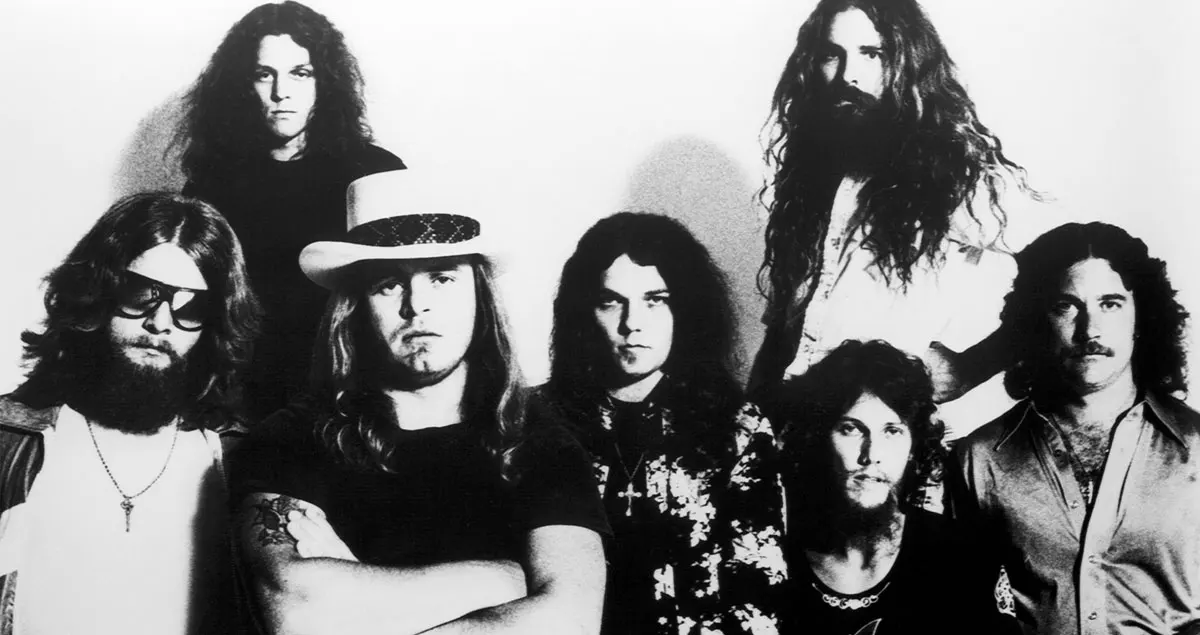
Lynyrd Skynyrd: Triple-Guitar Architecture, Regional Identity, and the Weight of American Hard Rock
Lynyrd Skynyrd are frequently framed as cultural shorthand: Southern pride, extended jams, iconic anthems. This framing flattens their musical importance. Beneath the regional symbolism lies one of the most structurally disciplined and riff-driven bands in classic American rock.
Skynyrd were not simply a Southern rock band. They were a hard rock unit built on architecture—three guitars operating not as decoration, but as an interlocking structural system. Their sound is often described as loose or rootsy, yet it is meticulously organized. The power of Lynyrd Skynyrd lies in their ability to fuse blues-based tradition with arena-scale authority without surrendering rhythmic control.
They did not soften hard rock with Southern flavor. They weighted it differently.
Beyond Regionalism: Structure Over Stereotype
The Southern rock label suggests warmth, looseness, and extended improvisation. Skynyrd certainly carried blues influence, but their approach was far more controlled than the stereotype implies.
From the outset, the band emphasized:
Tight rhythmic alignment
Defined section changes
Riff repetition over exploratory jamming
While contemporaries often allowed songs to drift into extended improvisation, Skynyrd anchored their compositions in repeatable, scalable frameworks. This discipline enabled their music to translate effectively from clubs to large venues.
Regional identity informed their tone—but structure defined their impact.
The Three-Guitar System: Division of Power
Lynyrd Skynyrd’s most radical innovation was their triple-guitar configuration. Rather than compete for dominance, the guitars operate as a coordinated unit.
This system functions through:
Clear role allocation (rhythm anchor, melodic counterline, lead articulation)
Harmonized dual leads reinforcing chord movement
Rhythmic reinforcement across multiple frequencies
Unlike twin-guitar harmony bands that prioritize melodic interplay, Skynyrd’s configuration emphasizes weight distribution. One guitar may maintain chordal stability while another adds harmonic color and a third punctuates with concise leads.
The result is density without clutter. Each guitar supports the others, creating a wide sonic foundation that feels heavier than traditional blues rock yet more organic than polished arena rock.
This architecture situates Skynyrd within the hard rock lineage—not through distortion levels, but through structural mass.
Riff Construction: Blues Discipline Without Drift
Skynyrd riffs are rooted in blues vocabulary but stripped of improvisational looseness. Instead of evolving through extended solo sections, riffs repeat with purpose.
Common traits include:
Strong downbeat emphasis
Mid-tempo pacing
Clear rhythmic accents
These riffs function as anchors rather than invitations to exploration. The repetition builds authority. Rather than relying on speed or technical flash, Skynyrd rely on consistency.
In hard rock terms, this aligns them more closely with disciplined riff bands than jam-oriented blues collectives.
Vocals: Command Through Directness
Ronnie Van Zant’s vocal delivery avoids theatrical exaggeration. His phrasing is direct, measured, and grounded.
Key elements include:
Strong mid-range projection
Minimal vibrato
Rhythmic alignment with guitar patterns
The voice does not float above the band. It integrates into the structure, reinforcing the rhythmic drive. This integration prevents sentimentality from diluting impact.
Even when lyrical themes touch on identity or reflection, delivery remains composed. Emotion is present but controlled.
Rhythm Section: The Quiet Engine
The rhythm section provides the glue that prevents the triple-guitar system from becoming unwieldy. Bass and drums prioritize steadiness over flourish.
Characteristics include:
Consistent tempo maintenance
Limited fill frequency
Subtle dynamic lifts
Rather than dominating, the rhythm section stabilizes. This allows guitars to expand harmonically without sacrificing coherence.
In the hard rock framework, such restraint enhances durability. The band’s songs do not depend on momentary bursts of intensity—they maintain a sustained weight.
Song Architecture: Expansion Within Limits
Skynyrd compositions often include extended instrumental sections, but these expansions remain within defined boundaries.
Structural features include:
Recurrent riff motifs
Harmonized lead passages
Clear verse-chorus demarcation
Improvisation occurs, yet it reinforces rather than destabilizes the core structure. This balance allows the band to maintain identity across varied song lengths.
Unlike purely improvisational acts, Skynyrd ensure that every extended passage remains tethered to a central motif. The architecture never dissolves.
Production: Organic but Controlled
Skynyrd recordings preserve a live feel without sacrificing clarity. Guitars are layered but separated. Vocals remain forward. Drums retain punch without overpowering.
This creates:
Warm tonal character
Clear instrumental definition
Controlled dynamic range
The organic quality reinforces authenticity while maintaining structural integrity. There is no excessive polish, yet no sloppiness.
In classic rock lineage, this balance contributes to longevity. The recordings feel immediate but not dated.
Cultural Identity vs Musical Mechanics
While Lynyrd Skynyrd are often interpreted through cultural symbolism, their musical mechanics operate independently of that narrative.
Their influence extends beyond regional boundaries because:
Their guitar architecture is adaptable
Their rhythmic discipline is universal
Their songwriting favors repeatable frameworks
This adaptability ensures that their core contributions—particularly the triple-guitar structure—remain relevant in broader hard rock contexts.
Live Performance: Controlled Energy
Live, Skynyrd amplify energy without sacrificing precision. Extended solos and harmonized leads maintain alignment rather than devolving into chaos.
Characteristics include:
Clear role maintenance among guitarists
Faithful reproduction of studio structures
Incremental dynamic escalation
Energy builds, but it does not spill over into disorder. The band’s authority stems from execution rather than spectacle.
Influence: The Blueprint for Southern Hard Rock
Lynyrd Skynyrd’s legacy is architectural rather than stylistic. They provided a template for:
Multi-guitar coordination in rock ensembles
Blues-rooted riffs adapted for large venues
Regional identity integrated with structural discipline
Many later Southern and arena rock bands adopted these principles, sometimes without replicating the precision that made them effective.
Longevity Through Structural Solidity
Despite lineup changes and historical disruptions, Skynyrd’s catalog retains coherence. The core principles remain intact:
Guitar coordination
Rhythmic steadiness
Riff repetition
Because these elements are foundational rather than trend-dependent, their music avoids temporal fragility.
Hard rock built on architecture rather than fashion tends to endure.
Conclusion: Weight Without Excess
Lynyrd Skynyrd are more than symbols of a region or era. They are architects of a specific kind of American hard rock—one that values weight over speed and structure over spectacle.
Their triple-guitar system and disciplined riff construction created a sound that feels expansive yet controlled. In doing so, they demonstrated that regional roots can strengthen hard rock rather than soften it.
They did not dilute the genre with identity.
They reinforced it—with mass, alignment, and repetition.