
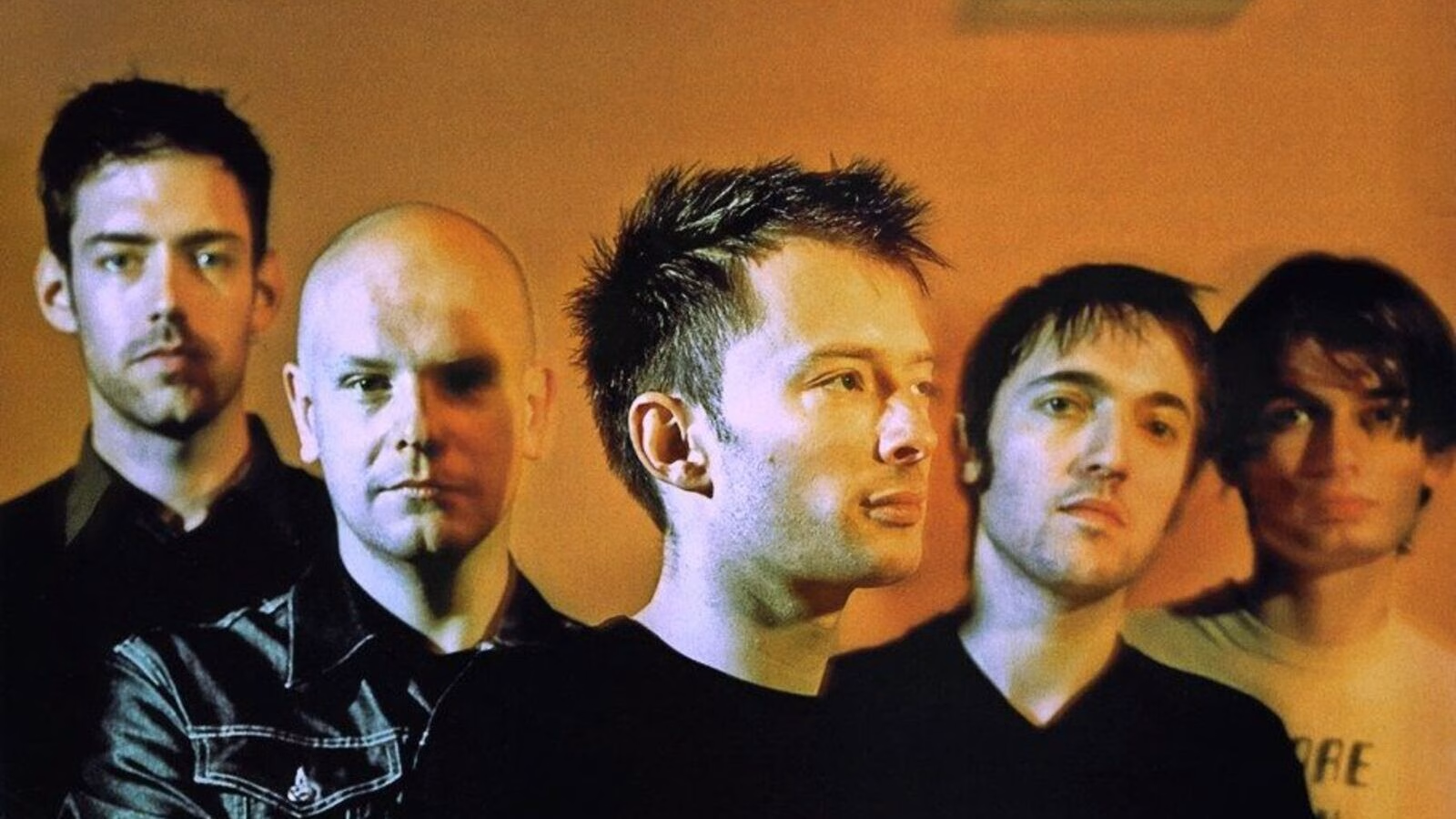
Radiohead

Radiohead: Yeniden Yaratım, Atmosfer ve Alternatif Rock’ın Yeniden Tanımlanması

Hızlı Bilgiler

Kuruluş: 1985 (On a Friday olarak), 1991’de Radiohead olarak yeniden adlandırıldı
Köken: Abingdon, Oxfordshire, İngiltere
Türler: Alternatif Rock, Sanat Rock, Elektronik Rock
Klasik Kadro: Thom Yorke, Jonny Greenwood, Colin Greenwood, Ed O’Brien, Philip Selway
Faaliyet Yılları: 1985–günümüz


Köken Hikayesi – Okul Grubundan Büyük Etiketlere

Radiohead, Thom Yorke, Greenwood kardeşler, Ed O’Brien ve Philip Selway tarafından kurulan On a Friday adlı bir okul grubu olarak başladı. 1990’ların başında bir plak şirketiyle anlaşma imzaladıktan sonra Radiohead adını benimsediler.

İlk albümleri, Pablo Honey (1993), “Creep” adlı single’ı içeriyordu. Şarkı ticari bir hit haline geldi ancak başlangıçta grubun daha geniş hedeflerini gölgede bıraktı. Albüm kendisi, geleneksel bir alternatif rock formatını izliyordu.

O formülü tekrarlamak yerine, Radiohead yön değiştirdi.

İkinci albümleri, The Bends (1995), artan kompozisyon derinliğini gösterdi. Prodüksiyon daha temizdi ve düzenlemeler daha genişti. “Fake Plastic Trees” ve “Street Spirit (Fade Out)” gibi parçalar, artan duygusal ve yapısal olgunluğu yansıtıyordu.

Grup, standart alternatif rock’ın ötesine evriliyordu.


Dönüm Noktası – OK Computer (1997)

OK Computer, Radiohead’in başarılı alternatif gruptan eleştirel bir ölçüt haline dönüşümünü işaret etti.

1997’de yayımlanan albüm, tematik kapsamı ve prodüksiyon karmaşıklığını genişletti. Yabancılaşma, teknolojik kaygı ve sosyal kopukluk konularını ele aldı.

Müzikal olarak, albüm şunları içeriyordu:

  • Katmanlı gitar dokuları

  • Ambient ses tasarımı

  • Sıradışı şarkı yapıları

“Paranoid Android” gibi parçalar çok bölümlü kompozisyonu gösterirken, “Karma Police” erişilebilirliği gerilimle dengeledi.

Albüm, geniş çapta eleştirel beğeni topladı ve 1990’ların en önemli kayıtları arasında sıkça anıldı.

Radiohead’i takip edenler değil, yenilikçiler olarak konumlandırdı.


Dönüm Noktası Albümü – OK Computer (1997)

OK Computer, Radiohead’in en çok tanınan albümü olmaya devam ediyor.

Yapısal önemi, bütünlükte yatıyor. Şarkılar tematik tutarlılıkla geçiş yapıyor ve prodüksiyon atmosferi geleneksel rock dinamikleri yerine vurguluyor.

“Paranoid Android” tek bir parçada birden fazla tempo ve ruh hali değişimi geçiriyor. “No Surprises” ise sözlerdeki huzursuzluğu vurgulamak için kısıtlı enstrümantasyon kullanıyor.

Albüm, yalnızca distorsiyona veya ses yüksekliğine dayanmak yerine, dokular ve katmanlar aracılığıyla gerilim oluşturuyor.

Bu, on yılın sonunda alternatif rock albümleri için beklentileri genişletti.
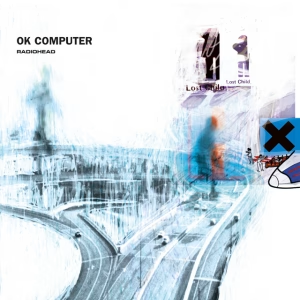
radiohead + OK Computer + album


İmza Şarkı – Paranoid Android

“Paranoid Android”, Radiohead’in yapısal hırsını örnekliyor.

Parça bölümler halinde açılıyor:

  • Melodik açılış

  • Distorsiyonlu orta kısım

  • Koro benzeri armonik geçiş

  • İklimsel çözüm

Geleneksel anlamda tekrarlayan bir nakarat yok. Kompozisyon ilerlemeyi önceliklendiriyor.

Jonny Greenwood’un gitar çalışı melodik ifadeyi deneysel dokularla harmanlıyor. Thom Yorke’un vokal sunumu ise kısıtlama ve yoğunluk arasında değişiyor.

Şarkı, Radiohead’in formülü terk etme isteğini pekiştirdi.


Yeniden Yaratım – Kid A (2000)

OK Computer’ın başarısının ardından, Radiohead tekrardan kaçındı.

Kid A (2000), elektronik enstrümantasyon, örnekleme ve minimal gitar varlığı içeriyordu. Ambient ve elektronik müzikten gelen etkiler, geleneksel rock yapılarının yerini aldı.

“Everything in Its Right Place” gibi şarkılar, riff yerine dokuya odaklandı.

Albüm başlangıçta dinleyicileri ikiye böldü ancak daha sonra alternatif müzikteki dönüm noktası olarak tanındı.

Radiohead, yeniden yaratımın kimliklerinin ayrılmaz bir parçası olduğunu gösterdi.


İstikrar ve Sürekli Evrim

Birçok alternatif gruptan farklı olarak, Radiohead kariyerleri boyunca tutarlı bir üyelik sürdürdü.

Sonraki albümler, Amnesiac (2001), In Rainbows (2007) ve A Moon Shaped Pool (2016), elektronik unsurları orkestrasyon ve kontrollü gitar yeniden tanıtımı ile harmanladı.

In Rainbows ayrıca, geleneksel dağıtım modellerine meydan okuyan, ne kadar ödeyeceğinizi kendinizin belirlediği dijital yayın stratejisi ile dikkat çekti.

Grubun evrimi ölçülüydü, ani değildi. Her albüm, tematik sürekliliği korurken ses vurgusunu ayarladı.


Üyeler

Thom Yorke – Vokal, Piyano, Gitar
Jonny Greenwood – Gitar, Klavyeler
Colin Greenwood – Bas
Ed O’Brien – Gitar
Philip Selway – Davul

Jonny Greenwood’un grup dışındaki orkestra kompozisyonları, sanatsal etki alanlarını daha da genişletti.


Seçilen Stüdyo Diskografisi Öne Çıkanlar

Pablo Honey (1993)
The Bends (1995)
OK Computer (1997)
Kid A (2000)
Amnesiac (2001)
Hail to the Thief (2003)
In Rainbows (2007)
A Moon Shaped Pool (2016)


Alternatif Rock’a Yapısal Katkı

Radiohead, modern müziği şu şekilde etkiledi:

  1. Albüm Düzeyinde Bütünlük
    Tam uzunluktaki yayınlar arasında tematik ve ses sürekliliğine vurgu.

  2. Elektronik Unsurların Entegrasyonu
    Alternatif rock, gitar merkezli çerçevelerin ötesine genişledi.

  3. Dağıtım İnovasyonu
    Geleneksel olmayan yayın stratejileri dijital müzik ekonomisini etkiledi.

  4. Atmosferik Prodüksiyon
    Doku, melodi kadar önemli hale geldi.

Distorsiyonla yönlendirilen grunge gruplarından veya hızla tanımlanan metal gruplarından farklı olarak, Radiohead yeniden yaratımı ve ses mimarisini önceliklendirdi.


Miras

Radiohead’in etkisi alternatif, indie ve deneysel müziğe kadar uzanıyor.

Kariyerleri, temel kimliklerini terk etmeden sürdürülen yeniliği gösteriyor.

Alternatif rock’ı ses yüksekliğini veya hızını artırarak değil, yapı ve atmosferi genişleterek yeniden tanımladılar.

Önemleri evrimde yatıyor.

Yön değiştirdiler — tekrar tekrar — ve tutarlılığı korudular.

Radiohead

Radiohead : Réinvention, Atmosphère et Redéfinition du Rock Alternatif

Faits Rapides

Fondé : 1985 (sous le nom On a Friday), renommé Radiohead en 1991
Origine : Abingdon, Oxfordshire, Angleterre
Genres : Rock Alternatif, Art Rock, Rock Électronique
Formation Classique : Thom Yorke, Jonny Greenwood, Colin Greenwood, Ed O’Brien, Philip Selway
Années Actives : 1985–présent


Histoire d’Origine – D’un Groupe Scolaire à un Label Majeur

Radiohead a commencé comme un groupe scolaire nommé On a Friday, formé par Thom Yorke, les frères Greenwood, Ed O’Brien et Philip Selway. Après avoir signé avec un label de musique au début des années 1990, ils ont adopté le nom Radiohead.

Leur premier album, Pablo Honey (1993), comportait le single “Creep.” La chanson est devenue un succès commercial mais a d’abord éclipsé les ambitions plus larges du groupe. L’album lui-même suivait un format de rock alternatif conventionnel.

Plutôt que de répéter cette formule, Radiohead a changé de direction.

Leur deuxième album, The Bends (1995), a démontré une profondeur compositionnelle accrue. La production était plus claire et les arrangements plus expansifs. Des morceaux tels que “Fake Plastic Trees” et “Street Spirit (Fade Out)” reflétaient une sophistication émotionnelle et structurelle croissante.

Le groupe évoluait au-delà du rock alternatif standard.


Le Tournant – OK Computer (1997)

OK Computer a marqué la transformation de Radiohead d’un groupe alternatif à succès en référence critique.

Sorti en 1997, l’album a élargi la portée thématique et la complexité de la production. Il abordait l’aliénation, l’anxiété technologique et la déconnexion sociale.

Musicalement, l’album incorporait :

  • Textures de guitare superposées

  • Conception sonore ambiante

  • Structures de chansons non conventionnelles

Des morceaux tels que “Paranoid Android” ont démontré une composition multi-sections, tandis que “Karma Police” a équilibré accessibilité et tension.

L’album a reçu un accueil critique largement positif et est souvent cité parmi les disques les plus importants des années 1990.

Il a positionné Radiohead comme des innovateurs plutôt que des suiveurs.


Album Marquant – OK Computer (1997)

OK Computer reste l’album le plus largement reconnu de Radiohead.

Sa signification structurelle réside dans la cohésion. Les chansons se transforment avec une cohérence thématique, et la production met l’accent sur l’atmosphère plutôt que sur les dynamiques rock traditionnelles.

“Paranoid Android” passe par plusieurs changements de tempo et d’humeur au sein d’un même morceau. “No Surprises” utilise une instrumentation retenue pour contraster avec un malaise lyrique.

Plutôt que de s’appuyer uniquement sur la distorsion ou le volume, l’album construit la tension à travers la texture et la superposition.

Il a élargi les attentes pour les albums de rock alternatif à la fin de la décennie.

radiohead + OK Computer + album


Chanson Signature – Paranoid Android

“Paranoid Android” illustre l’ambition structurelle de Radiohead.

Le morceau se déroule en sections :

  • Ouverture mélodique

  • Milieu distordu

  • Transition harmonique semblable à un chœur

  • Résolution climactique

Il n’y a pas de refrain répétitif au sens traditionnel. La composition privilégie la progression.

Le travail de guitare de Jonny Greenwood mélange phrasé mélodique et textures expérimentales. La voix de Thom Yorke oscille entre retenue et intensité.

La chanson a renforcé la volonté de Radiohead d’abandonner la formule.


Réinvention – Kid A (2000)

Après le succès de OK Computer, Radiohead a évité la répétition.

Kid A (2000) a incorporé des instruments électroniques, des échantillonnages et une présence de guitare minimale. Les influences de la musique ambiante et électronique ont remplacé les structures rock conventionnelles.

Des chansons telles que “Everything in Its Right Place” se concentraient sur la texture plutôt que sur le riff.

L’album a initialement divisé les auditeurs mais a ensuite été reconnu comme un moment clé dans la musique alternative.

Radiohead a démontré que la réinvention était intégrale à leur identité.


Stabilité et Évolution Continue

Contrairement à de nombreux groupes alternatifs, Radiohead a maintenu une composition stable tout au long de sa carrière.

Les albums suivants, y compris Amnesiac (2001), In Rainbows (2007) et A Moon Shaped Pool (2016), ont mélangé des éléments électroniques avec de l’orchestration et une réintroduction contrôlée de la guitare.

In Rainbows est également devenu notable pour sa stratégie de sortie numérique “payez ce que vous voulez”, défiant les modèles de distribution traditionnels.

L’évolution du groupe a été mesurée plutôt qu’abrupt. Chaque album a ajusté l’accent sonore tout en préservant la continuité thématique.


Membres

Thom Yorke – Voix, Piano, Guitare
Jonny Greenwood – Guitare, Claviers
Colin Greenwood – Basse
Ed O’Brien – Guitare
Philip Selway – Batterie

Les compositions orchestrales de Jonny Greenwood en dehors du groupe ont encore étendu leur portée artistique.


Points Saillants de la Discographie Studio Sélectionnée

Pablo Honey (1993)
The Bends (1995)
OK Computer (1997)
Kid A (2000)
Amnesiac (2001)
Hail to the Thief (2003)
In Rainbows (2007)
A Moon Shaped Pool (2016)


Contribution Structurelle au Rock Alternatif

Radiohead a influencé la musique moderne à travers :

  1. Cohésion au Niveau de l’Album
    Accent sur la continuité thématique et sonore à travers les sorties complètes.

  2. Intégration d’Éléments Électroniques
    Le rock alternatif s’est étendu au-delà des cadres centrés sur la guitare.

  3. Innovation en Distribution
    Des stratégies de sortie non traditionnelles ont influencé l’économie de la musique numérique.

  4. Production Atmosphérique
    La texture est devenue aussi importante que la mélodie.

Contrairement aux groupes grunge motivés par la distorsion ou aux groupes de métal définis par la vitesse, Radiohead a privilégié la réinvention et l’architecture sonore.


Héritage

L’influence de Radiohead s’étend à la musique alternative, indie et expérimentale.

Leur carrière démontre une innovation soutenue sans abandonner leur identité fondamentale.

Ils ont redéfini le rock alternatif non pas en augmentant le volume ou la vitesse, mais en élargissant la structure et l’atmosphère.

Leur signification réside dans l’évolution.

Ils ont changé de direction — à plusieurs reprises — et ont maintenu la cohérence.

Radiohead

Radiohead: Heruitvinding, Sfeer en de Herdefinitie van Alternatieve Rock

Feiten

Opgericht: 1985 (als On a Friday), hernoemd naar Radiohead in 1991
Oorsprong: Abingdon, Oxfordshire, Engeland
Genres: Alternatieve Rock, Art Rock, Elektronische Rock
Klassieke Line-Up: Thom Yorke, Jonny Greenwood, Colin Greenwood, Ed O’Brien, Philip Selway
Actieve Jaren: 1985–heden


Oorsprongsverhaal – Van Schoolband naar Groot Label

Radiohead begon als een schoolband genaamd On a Friday, gevormd door Thom Yorke, de broers Greenwood, Ed O’Brien en Philip Selway. Na het tekenen bij een platenlabel in het begin van de jaren 90, namen ze de naam Radiohead aan.

Hun debuutalbum, Pablo Honey (1993), bevatte de single “Creep.” Het nummer werd een commercieel succes, maar overschaduwde aanvankelijk de bredere ambities van de band. Het album zelf volgde een conventioneel alternatieve rockformaat.

In plaats van die formule te herhalen, verschoof Radiohead de richting.

Hun tweede album, The Bends (1995), toonde een grotere compositie diepte. De productie was schoner en de arrangementen uitgebreider. Nummers zoals “Fake Plastic Trees” en “Street Spirit (Fade Out)” weerspiegelden een groeiende emotionele en structurele verfijning.

De band evolueerde voorbij de standaard alternatieve rock.


Het Keerpunt – OK Computer (1997)

OK Computer markeerde Radiohead’s transformatie van succesvolle alternatieve band naar kritische maatstaf.

Uitgebracht in 1997, breidde het album het thematische bereik en de productiecomplexiteit uit. Het behandelde vervreemding, technologische angst en sociale disconnectie.

Muzikaal incorporateerde het album:

  • Gelaagde gitaartexturen

  • Ambient geluidsontwerp

  • Onconventionele songstructuren

Nummers zoals “Paranoid Android” demonstreerden multi-sectie compositie, terwijl “Karma Police” toegankelijkheid in balans bracht met spanning.

Het album ontving brede kritische lof en wordt vaak genoemd als een van de belangrijkste platen van de jaren 90.

Het positioneerde Radiohead als vernieuwers in plaats van volgers.


Mijlpaal Album – OK Computer (1997)

OK Computer blijft Radiohead’s meest erkende album.

De structurele betekenis ligt in samenhang. Nummers schakelen over met thematische consistentie, en de productie benadrukt sfeer boven traditionele rockdynamiek.

“Paranoid Android” beweegt door meerdere tempo- en gemoedstoestandverschuivingen binnen een enkel nummer. “No Surprises” gebruikt terughoudende instrumentatie om lyrische onrust te contrasteren.

In plaats van uitsluitend op vervorming of volume te vertrouwen, bouwt het album spanning op door textuur en gelaagdheid.

Het breidde de verwachtingen voor alternatieve rockalbums aan het einde van het decennium uit.

radiohead + OK Computer + album


Handtekening Nummer – Paranoid Android

“Paranoid Android” exemplificeert Radiohead’s structurele ambitie.

Het nummer ontvouwt zich in secties:

  • Melodische opening

  • Vervormde middensectie

  • Koorachtige harmonische overgang

  • Climactische resolutie

Er is geen repetitieve refrein in de traditionele zin. De compositie prioriteert vooruitgang.

Jonny Greenwood’s gitaarwerk mengt melodische frasering met experimentele texturen. Thom Yorke’s vocale uitvoering verschuift tussen terughoudendheid en intensiteit.

Het nummer versterkte Radiohead’s bereidheid om formules te verlaten.


Heruitvinding – Kid A (2000)

Na het succes van OK Computer, vermeed Radiohead herhaling.

Kid A (2000) incorporateerde elektronische instrumentatie, sampling en minimale gitaarpresentie. Invloeden van ambient en elektronische muziek vervingen conventionele rockstructuren.

Nummers zoals “Everything in Its Right Place” waren gericht op textuur in plaats van riff.

Het album verdeelde aanvankelijk luisteraars, maar werd later erkend als een cruciaal moment in alternatieve muziek.

Radiohead toonde aan dat heruitvinding integraal was voor hun identiteit.


Stabiliteit en Voortdurende Evolutie

In tegenstelling tot veel alternatieve acts, behield Radiohead een consistente leden door hun carrière heen.

Latere albums, waaronder Amnesiac (2001), In Rainbows (2007), en A Moon Shaped Pool (2016), mengden elektronische elementen met orkestratie en gecontroleerde herintroductie van gitaar.

In Rainbows werd ook opmerkelijk vanwege zijn pay-what-you-want digitale release strategie, die traditionele distributiemodellen uitdaagde.

De evolutie van de band was gemeten in plaats van abrupt. Elk album paste de sonische nadruk aan terwijl het thematische continuïteit behield.


Leden

Thom Yorke – Zang, Piano, Gitaar
Jonny Greenwood – Gitaar, Toetsen
Colin Greenwood – Bas
Ed O’Brien – Gitaar
Philip Selway – Drums

Jonny Greenwood’s orkestrale composities buiten de band breidden hun artistieke reikwijdte verder uit.


Geselecteerde Studio Discografie Hoogtepunten

Pablo Honey (1993)
The Bends (1995)
OK Computer (1997)
Kid A (2000)
Amnesiac (2001)
Hail to the Thief (2003)
In Rainbows (2007)
A Moon Shaped Pool (2016)


Structurele Bijdrage aan Alternatieve Rock

Radiohead beïnvloedde moderne muziek door:

  1. Album-Niveau Cohesie
    Nadruk op thematische en sonische continuïteit over volledige releases.

  2. Integratie van Elektronische Elementen
    Alternatieve rock breidde zich uit voorbij gitaar-gecentreerde structuren.

  3. Distributie Innovatie
    Niet-traditionele release strategieën beïnvloedden de economie van digitale muziek.

  4. Atmosferische Productie
    Textuur werd net zo belangrijk als melodie.

In tegenstelling tot grungebands die gedreven werden door vervorming of metalbands die gedefinieerd werden door snelheid, prioriteerde Radiohead heruitvinding en sonische architectuur.


Erfenis

Radiohead’s invloed strekt zich uit over alternatieve, indie en experimentele muziek.

Hun carrière demonstreert voortdurende innovatie zonder de kernidentiteit te verlaten.

Ze herdefinieerden alternatieve rock niet door het volume of de snelheid te verhogen, maar door structuur en sfeer uit te breiden.

Hun betekenis ligt in evolutie.

Ze veranderden van richting — herhaaldelijk — en behielden samenhang.

Radiohead

Radiohead: Neuerfindung, Atmosphäre und die Neudefinition von Alternative Rock

Kurze Fakten

Gegründet: 1985 (als On a Friday), 1991 in Radiohead umbenannt
Herkunft: Abingdon, Oxfordshire, England
Genres: Alternative Rock, Art Rock, Electronic Rock
Klassische Besetzung: Thom Yorke, Jonny Greenwood, Colin Greenwood, Ed O’Brien, Philip Selway
Aktive Jahre: 1985–heute


Ursprungsgeschichte – Von der Schulband zum Major-Label

Radiohead begann als Schulband namens On a Friday, gegründet von Thom Yorke, den Greenwood-Brüdern, Ed O’Brien und Philip Selway. Nach der Unterzeichnung bei einem Plattenlabel in den frühen 1990er Jahren nahmen sie den Namen Radiohead an.

Ihr Debütalbum, Pablo Honey (1993), enthielt die Single „Creep.“ Der Song wurde ein kommerzieller Hit, überschattete jedoch zunächst die breiteren Ambitionen der Band. Das Album selbst folgte einem konventionellen Alternative-Rock-Format.

Anstatt diese Formel zu wiederholen, änderte Radiohead die Richtung.

Ihr zweites Album, The Bends (1995), zeigte eine gesteigerte kompositorische Tiefe. Die Produktion war klarer und die Arrangements umfangreicher. Tracks wie „Fake Plastic Trees“ und „Street Spirit (Fade Out)“ spiegelten wachsende emotionale und strukturelle Raffinesse wider.

Die Band entwickelte sich über den Standard des Alternative Rock hinaus.


Der Wendepunkt – OK Computer (1997)

OK Computer markierte Radioheads Transformation von einer erfolgreichen Alternative-Band zu einem kritischen Maßstab.

Veröffentlicht 1997, erweiterte das Album den thematischen Umfang und die Produktionskomplexität. Es thematisierte Entfremdung, technologische Ängste und soziale Isolation.

Musikalisch integrierte das Album:

  • Schichtete Gitarren-Texturen

  • Ambient Sounddesign

  • Unkonventionelle Songstrukturen

Tracks wie „Paranoid Android“ demonstrierten eine mehrteilige Komposition, während „Karma Police“ Zugänglichkeit mit Spannung ausbalancierte.

Das Album erhielt weitreichende kritische Anerkennung und wird häufig als eines der wichtigsten Alben der 1990er Jahre zitiert.

Es positionierte Radiohead als Innovatoren und nicht als Nachahmer.


Meilenstein-Album – OK Computer (1997)

OK Computer bleibt Radioheads am weitesten anerkanntes Album.

Seine strukturelle Bedeutung liegt in der Kohäsion. Songs wechseln mit thematischer Konsistenz, und die Produktion betont Atmosphäre über traditionelle Rockdynamik.

„Paranoid Android“ bewegt sich durch mehrere Tempo- und Stimmungswechsel innerhalb eines einzelnen Tracks. „No Surprises“ nutzt zurückhaltende Instrumentierung, um lyrische Unruhe zu kontrastieren.

Anstatt sich ausschließlich auf Verzerrung oder Lautstärke zu verlassen, baut das Album Spannung durch Textur und Schichtung auf.

Es erweiterte die Erwartungen an Alternative-Rock-Alben zum Ende des Jahrzehnts.

radiohead + OK Computer + album


Signatursong – Paranoid Android

„Paranoid Android“ exemplifiziert Radioheads strukturelle Ambition.

Der Track entfaltet sich in Abschnitten:

  • Melodischer Einstieg

  • Verzerrter Mittelteil

  • Choralartige harmonische Übergänge

  • Klimatische Auflösung

Es gibt keinen sich wiederholenden Refrain im traditionellen Sinne. Die Komposition priorisiert Fortschritt.

Jonny Greenwoods Gitarrenarbeit verbindet melodische Phrasierung mit experimentellen Texturen. Thom Yorkes Gesang wechselt zwischen Zurückhaltung und Intensität.

Der Song verstärkte Radioheads Bereitschaft, Formeln abzulehnen.


Neuerfindung – Kid A (2000)

Nach dem Erfolg von OK Computer vermied Radiohead Wiederholungen.

Kid A (2000) integrierte elektronische Instrumentierung, Sampling und minimale Gitarrenpräsenz. Einflüsse aus Ambient- und elektronischer Musik ersetzten konventionelle Rockstrukturen.

Songs wie „Everything in Its Right Place“ konzentrierten sich auf Textur statt auf Riff.

Das Album spaltete zunächst die Zuhörer, wurde aber später als ein entscheidender Moment in der alternativen Musik anerkannt.

Radiohead demonstrierte, dass Neuerfindung ein integraler Bestandteil ihrer Identität war.


Stabilität und fortwährende Evolution

Im Gegensatz zu vielen Alternative-Acts behielt Radiohead während ihrer Karriere eine konstante Besetzung bei.

Nachfolgende Alben, darunter Amnesiac (2001), In Rainbows (2007) und A Moon Shaped Pool (2016), verbanden elektronische Elemente mit Orchestrierung und kontrollierter Wiederintroduktion von Gitarren.

In Rainbows wurde auch für seine „Zahl, was du willst“-Digitalveröffentlichungsstrategie bekannt, die traditionelle Vertriebsmodelle herausforderte.

Die Evolution der Band war gemessen und nicht abrupt. Jedes Album passte den klanglichen Schwerpunkt an, während die thematische Kontinuität erhalten blieb.


Mitglieder

Thom Yorke – Gesang, Klavier, Gitarre
Jonny Greenwood – Gitarre, Keyboards
Colin Greenwood – Bass
Ed O’Brien – Gitarre
Philip Selway – Schlagzeug

Jonny Greenwoods orchestrale Kompositionen außerhalb der Band erweiterten weiter ihren künstlerischen Einfluss.


Ausgewählte Höhepunkte der Studio-Diskografie

Pablo Honey (1993)
The Bends (1995)
OK Computer (1997)
Kid A (2000)
Amnesiac (2001)
Hail to the Thief (2003)
In Rainbows (2007)
A Moon Shaped Pool (2016)


Struktureller Beitrag zum Alternative Rock

Radiohead beeinflusste moderne Musik durch:

  1. Album-Level Kohäsion
    Betonung der thematischen und klanglichen Kontinuität über vollständige Veröffentlichungen.

  2. Integration elektronischer Elemente
    Alternative Rock erweiterte sich über gitarrenorientierte Rahmen hinaus.

  3. Vertriebsinnovation
    Nicht-traditionelle Veröffentlichungsstrategien beeinflussten die digitale Musikökonomie.

  4. Atmosphärische Produktion
    Textur wurde ebenso wichtig wie Melodie.

Im Gegensatz zu Grunge-Bands, die von Verzerrung getrieben werden, oder Metal-Bands, die durch Geschwindigkeit definiert sind, priorisierte Radiohead Neuerfindung und klangliche Architektur.


Vermächtnis

Radioheads Einfluss erstreckt sich über Alternative, Indie und experimentelle Musik.

Ihre Karriere zeigt nachhaltige Innovation, ohne die Kernidentität aufzugeben.

Sie definierten Alternative Rock nicht durch Erhöhung von Lautstärke oder Geschwindigkeit, sondern durch Erweiterung von Struktur und Atmosphäre.

Ihre Bedeutung liegt in der Evolution.

Sie änderten die Richtung – wiederholt – und bewahrten dabei die Kohärenz.

Radiohead

Radiohead: Reinventar, Atmósfera y la redefinición del Rock Alternativo

Datos Rápidos

Fundado: 1985 (como On a Friday), renombrado Radiohead en 1991
Origen: Abingdon, Oxfordshire, Inglaterra
Géneros: Rock Alternativo, Art Rock, Rock Electrónico
Formación Clásica: Thom Yorke, Jonny Greenwood, Colin Greenwood, Ed O’Brien, Philip Selway
Años Activos: 1985–presente


Historia de Origen – De Banda Escolar a Sello Mayor

Radiohead comenzó como una banda escolar llamada On a Friday, formada por Thom Yorke, los hermanos Greenwood, Ed O’Brien y Philip Selway. Después de firmar con un sello discográfico a principios de los años 90, adoptaron el nombre Radiohead.

Su álbum debut, Pablo Honey (1993), presentó el sencillo “Creep.” La canción se convirtió en un éxito comercial pero inicialmente eclipsó las ambiciones más amplias de la banda. El álbum en sí seguía un formato convencional de rock alternativo.

En lugar de repetir esa fórmula, Radiohead cambió de dirección.

Su segundo álbum, The Bends (1995), demostró una mayor profundidad compositiva. La producción era más limpia y los arreglos más expansivos. Temas como “Fake Plastic Trees” y “Street Spirit (Fade Out)” reflejaron una creciente sofisticación emocional y estructural.

La banda estaba evolucionando más allá del rock alternativo estándar.


El Punto de Inflexión – OK Computer (1997)

OK Computer marcó la transformación de Radiohead de banda alternativa exitosa a referente crítico.

Lanzado en 1997, el álbum amplió el alcance temático y la complejidad de producción. Abordó la alienación, la ansiedad tecnológica y la desconexión social.

Musicalmente, el álbum incorporó:

  • Texturas de guitarra en capas

  • Diseño de sonido ambiental

  • Estructuras de canción no convencionales

Temas como “Paranoid Android” demostraron una composición de múltiples secciones, mientras que “Karma Police” equilibró accesibilidad con tensión.

El álbum recibió aclamación crítica generalizada y se cita frecuentemente entre los discos más importantes de los años 90.

Posicionó a Radiohead como innovadores en lugar de seguidores.


Álbum Emblemático – OK Computer (1997)

OK Computer sigue siendo el álbum más reconocido de Radiohead.

Su importancia estructural radica en la cohesión. Las canciones transitan con consistencia temática, y la producción enfatiza la atmósfera sobre las dinámicas de rock tradicionales.

“Paranoid Android” se mueve a través de múltiples cambios de tempo y estado de ánimo dentro de una sola pista. “No Surprises” utiliza una instrumentación contenida para contrastar la inquietud lírica.

En lugar de depender únicamente de la distorsión o el volumen, el álbum construye tensión a través de la textura y la superposición.

Amplió las expectativas para los álbumes de rock alternativo al final de la década.

radiohead + OK Computer + album


Canción Emblemática – Paranoid Android

“Paranoid Android” ejemplifica la ambición estructural de Radiohead.

La pista se desarrolla en secciones:

  • Apertura melódica

  • Sección media distorsionada

  • Transición armónica similar a un coro

  • Resolución climática

No hay un coro repetitivo en el sentido tradicional. La composición prioriza la progresión.

El trabajo de guitarra de Jonny Greenwood combina frases melódicas con texturas experimentales. La entrega vocal de Thom Yorke varía entre la contención y la intensidad.

La canción reforzó la disposición de Radiohead a abandonar la fórmula.


Reinvención – Kid A (2000)

Tras el éxito de OK Computer, Radiohead evitó la repetición.

Kid A (2000) incorporó instrumentación electrónica, sampling y una presencia mínima de guitarra. Influencias de la música ambiental y electrónica reemplazaron las estructuras de rock convencionales.

Temas como “Everything in Its Right Place” se centraron en la textura en lugar de en el riff.

El álbum inicialmente dividió a los oyentes, pero más tarde se reconoció como un momento clave en la música alternativa.

Radiohead demostró que la reinvención era integral a su identidad.


Estabilidad y Evolución Continua

A diferencia de muchos actos alternativos, Radiohead mantuvo una membresía consistente a lo largo de su carrera.

Álbumes posteriores, incluyendo Amnesiac (2001), In Rainbows (2007) y A Moon Shaped Pool (2016), combinaron elementos electrónicos con orquestación y una reintroducción controlada de la guitarra.

In Rainbows también se volvió notable por su estrategia de lanzamiento digital de pago lo que quieras, desafiando los modelos de distribución tradicionales.

La evolución de la banda fue medida en lugar de abrupta. Cada álbum ajustó el énfasis sonoro mientras preservaba la continuidad temática.


Miembros

Thom Yorke – Voces, Piano, Guitarra
Jonny Greenwood – Guitarra, Teclados
Colin Greenwood – Bajo
Ed O’Brien – Guitarra
Philip Selway – Batería

Las composiciones orquestales de Jonny Greenwood fuera de la banda ampliaron aún más su alcance artístico.


Destacados de la Discografía de Estudio

Pablo Honey (1993)
The Bends (1995)
OK Computer (1997)
Kid A (2000)
Amnesiac (2001)
Hail to the Thief (2003)
In Rainbows (2007)
A Moon Shaped Pool (2016)


Contribución Estructural al Rock Alternativo

Radiohead influyó en la música moderna a través de:

  1. Cohesión a Nivel de Álbum
    Énfasis en la continuidad temática y sonora a lo largo de lanzamientos de larga duración.

  2. Integración de Elementos Electrónicos
    El rock alternativo se expandió más allá de los marcos centrados en la guitarra.

  3. Innovación en Distribución
    Estrategias de lanzamiento no tradicionales influyeron en la economía de la música digital.

  4. Producción Atmosférica
    La textura se volvió tan importante como la melodía.

A diferencia de las bandas de grunge impulsadas por la distorsión o las bandas de metal definidas por la velocidad, Radiohead priorizó la reinvención y la arquitectura sonora.


Legado

La influencia de Radiohead se extiende a través de la música alternativa, indie y experimental.

Su carrera demuestra una innovación sostenida sin abandonar la identidad central.

Redefinieron el rock alternativo no aumentando el volumen o la velocidad, sino expandiendo la estructura y la atmósfera.

Su importancia radica en la evolución.

Cambiaron de dirección — repetidamente — y mantuvieron la coherencia.

Radiohead

Radiohead: Reinvention, Atmosphere, and the Redefinition of Alternative Rock

Quick Facts

Founded: 1985 (as On a Friday), renamed Radiohead in 1991
Origin: Abingdon, Oxfordshire, England
Genres: Alternative Rock, Art Rock, Electronic Rock
Classic Line-Up: Thom Yorke, Jonny Greenwood, Colin Greenwood, Ed O’Brien, Philip Selway
Years Active: 1985–present


Origin Story – From School Band to Major Label

Radiohead began as a school band named On a Friday, formed by Thom Yorke, the Greenwood brothers, Ed O’Brien, and Philip Selway. After signing to a record label in the early 1990s, they adopted the name Radiohead.

Their debut album, Pablo Honey (1993), featured the single “Creep.” The song became a commercial hit but initially overshadowed the band’s broader ambitions. The album itself followed a conventional alternative rock format.

Rather than repeating that formula, Radiohead shifted direction.

Their second album, The Bends (1995), demonstrated increased compositional depth. The production was cleaner, and the arrangements more expansive. Tracks such as “Fake Plastic Trees” and “Street Spirit (Fade Out)” reflected growing emotional and structural sophistication.

The band was evolving beyond standard alternative rock.


The Turning Point – OK Computer (1997)

OK Computer marked Radiohead’s transformation from successful alternative band to critical benchmark.

Released in 1997, the album expanded thematic scope and production complexity. It addressed alienation, technological anxiety, and social disconnection.

Musically, the album incorporated:

  • Layered guitar textures

  • Ambient sound design

  • Unconventional song structures

Tracks such as “Paranoid Android” demonstrated multi-section composition, while “Karma Police” balanced accessibility with tension.

The album received widespread critical acclaim and is frequently cited among the most important records of the 1990s.

It positioned Radiohead as innovators rather than followers.


Milestone Album – OK Computer (1997)

OK Computer remains Radiohead’s most widely recognized album.

Its structural significance lies in cohesion. Songs transition with thematic consistency, and the production emphasizes atmosphere over traditional rock dynamics.

“Paranoid Android” moves through multiple tempo and mood shifts within a single track. “No Surprises” uses restrained instrumentation to contrast lyrical unease.

Rather than relying solely on distortion or volume, the album builds tension through texture and layering.

It expanded expectations for alternative rock albums at the close of the decade.

radiohead + OK Computer + album


Signature Song – Paranoid Android

“Paranoid Android” exemplifies Radiohead’s structural ambition.

The track unfolds in sections:

  • Melodic opening

  • Distorted midsection

  • Choral-like harmonic transition

  • Climactic resolution

There is no repetitive chorus in the traditional sense. The composition prioritizes progression.

Jonny Greenwood’s guitar work blends melodic phrasing with experimental textures. Thom Yorke’s vocal delivery shifts between restraint and intensity.

The song reinforced Radiohead’s willingness to abandon formula.


Reinvention – Kid A (2000)

Following the success of OK Computer, Radiohead avoided repetition.

Kid A (2000) incorporated electronic instrumentation, sampling, and minimal guitar presence. Influences from ambient and electronic music replaced conventional rock structures.

Songs such as “Everything in Its Right Place” centered on texture rather than riff.

The album initially divided listeners but later became recognized as a pivotal moment in alternative music.

Radiohead demonstrated that reinvention was integral to their identity.


Stability and Continued Evolution

Unlike many alternative acts, Radiohead maintained consistent membership throughout their career.

Subsequent albums, including Amnesiac (2001), In Rainbows (2007), and A Moon Shaped Pool (2016), blended electronic elements with orchestration and controlled guitar reintroduction.

In Rainbows also became notable for its pay-what-you-want digital release strategy, challenging traditional distribution models.

The band’s evolution was measured rather than abrupt. Each album adjusted sonic emphasis while preserving thematic continuity.


Members

Thom Yorke – Vocals, Piano, Guitar
Jonny Greenwood – Guitar, Keyboards
Colin Greenwood – Bass
Ed O’Brien – Guitar
Philip Selway – Drums

Jonny Greenwood’s orchestral compositions outside the band further extended their artistic reach.


Selected Studio Discography Highlights

Pablo Honey (1993)
The Bends (1995)
OK Computer (1997)
Kid A (2000)
Amnesiac (2001)
Hail to the Thief (2003)
In Rainbows (2007)
A Moon Shaped Pool (2016)


Structural Contribution to Alternative Rock

Radiohead influenced modern music through:

  1. Album-Level Cohesion
    Emphasis on thematic and sonic continuity across full-length releases.

  2. Integration of Electronic Elements
    Alternative rock expanded beyond guitar-centric frameworks.

  3. Distribution Innovation
    Non-traditional release strategies influenced digital music economics.

  4. Atmospheric Production
    Texture became as important as melody.

Unlike grunge bands driven by distortion or metal bands defined by speed, Radiohead prioritized reinvention and sonic architecture.


Legacy

Radiohead’s influence extends across alternative, indie, and experimental music.

Their career demonstrates sustained innovation without abandoning core identity.

They redefined alternative rock not by increasing volume or speed, but by expanding structure and atmosphere.

Their significance lies in evolution.

They changed direction — repeatedly — and maintained coherence.