
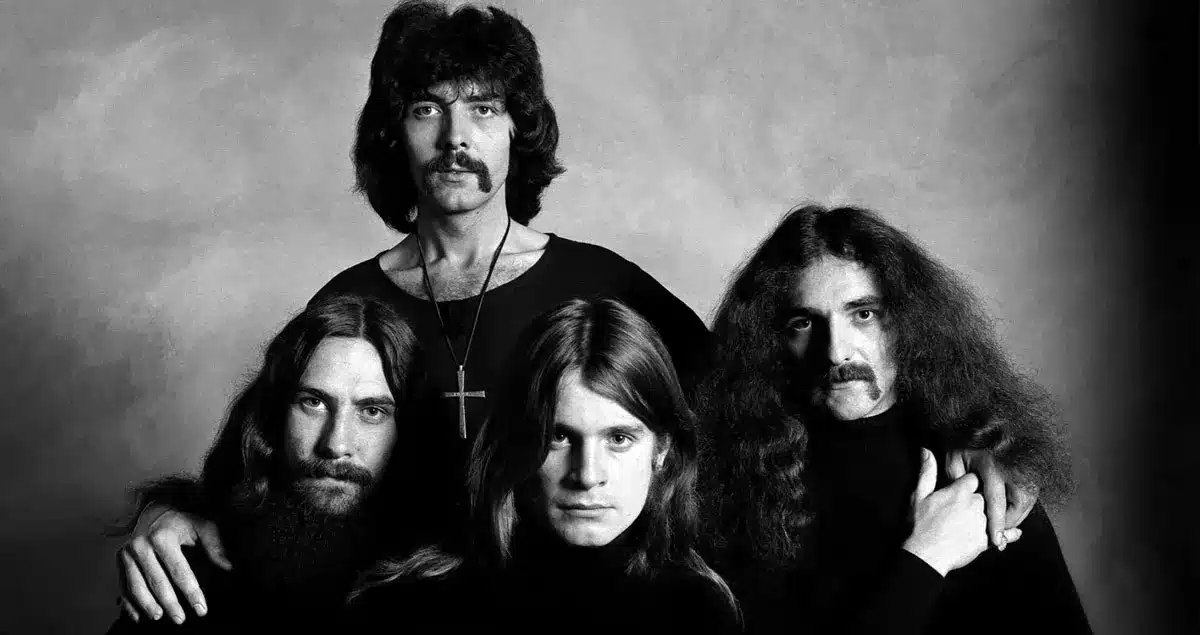
Black Sabbath: The Band That Defined Heavy Metal
Quick Facts
Founded: 1968
Origin: Birmingham, England
Genres: Heavy Metal, Doom Metal, Hard Rock
Classic Line-Up: Ozzy Osbourne, Tony Iommi, Geezer Butler, Bill Ward
Years Active: 1968–2017
Origin Story – From Blues Band to Something Darker
Black Sabbath began as a blues rock band called Earth. The original members — Ozzy Osbourne, Tony Iommi, Geezer Butler, and Bill Ward — were young musicians trying to establish themselves in late-1960s Britain.
They were technically competent, but not unique. Bands like Cream and Led Zeppelin had already expanded blues rock into heavier territory.
The shift came from observation.
The band noticed that horror films consistently attracted audiences. People were willing to pay to feel fear. That insight led to a question: could music generate the same emotional reaction?
Geezer Butler, who had an interest in darker literature and religious imagery, began writing lyrics that explored fear, war, and existential anxiety. Tony Iommi experimented with dissonant intervals, particularly the tritone, to create tension.
The song “Black Sabbath” marked the turning point. Its slow tempo, ominous riff, and minimal structure sounded fundamentally different from mainstream rock of the time.
The band renamed itself after that track.
This was not just a stylistic adjustment. It was the foundation of heavy metal.
The Technical Foundation – Tony Iommi’s Injury
Tony Iommi’s factory accident is often retold because it had a direct impact on the band’s sound.
After losing the tips of two fingers on his fretting hand, Iommi had to modify his playing style. He crafted prosthetic fingertips and tuned his guitar down to reduce string tension.
The lower tuning created a darker, thicker tonal range.
This adjustment unintentionally helped define the sonic identity of heavy metal: heavier guitar tone, greater emphasis on riff weight, and slower pacing.
What began as a physical limitation became a structural innovation.
The Debut Album – Black Sabbath (1970)
Released in February 1970, the band’s self-titled debut was recorded quickly and with limited production polish.
The opening track begins with rain and church bells before introducing a slow, descending riff built on the tritone. The atmosphere is deliberate and controlled.
Unlike many rock bands of the era, Black Sabbath prioritized mood over speed. Bill Ward’s drumming retained elements of jazz swing, but the overall pacing was restrained. Geezer Butler’s bass reinforced the guitar lines rather than competing melodically.
Critics initially dismissed the album, but commercial response told a different story. It reached the UK Top 10 and established a dedicated audience.
The album introduced a template that would soon be expanded.
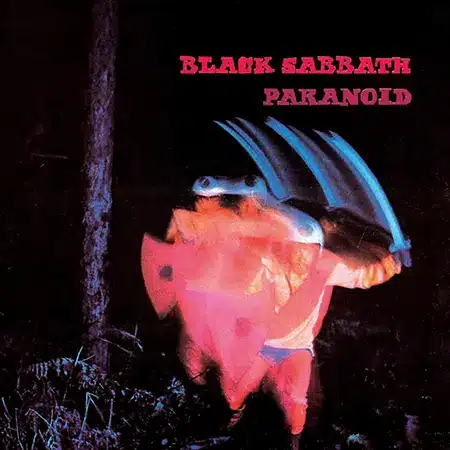
Milestone Album – Paranoid (1970)
Later the same year, Black Sabbath released Paranoid. This album solidified their position within emerging heavy metal culture.
It included three of their most important tracks:
War Pigs
Paranoid
Iron Man
“War Pigs” addressed military leadership and political corruption. Its extended intro and structured dynamics demonstrated compositional growth beyond the debut.
“Paranoid,” written quickly to complete the album, became their biggest commercial hit. Its shorter runtime and driving tempo made it radio-friendly without abandoning the band’s identity.
“Iron Man” slowed the pace again, emphasizing riff repetition and thematic storytelling.
With Paranoid, Black Sabbath established the core elements of heavy metal:
Down-tuned guitars
Repetitive, riff-centered structure
Dark lyrical themes
Controlled tempo
This was the album that moved them from curiosity to movement leaders.
Expansion – Master of Reality and Structural Heaviness
With Master of Reality (1971), the band leaned further into heaviness.
Songs like “Children of the Grave” and “Into the Void” featured even lower tunings and simplified rhythmic emphasis. The riffs became more minimal but more forceful.
The album is widely considered a blueprint for doom metal.
Black Sabbath demonstrated that heaviness was not dependent on speed. It depended on tone, repetition, and spatial control.
Signature Song – Iron Man
“Iron Man” remains one of the most recognized riffs in rock history.
Its structure is straightforward. The main riff repeats with measured pacing. The narrative describes a time-traveling figure seeking revenge, blending science fiction with social alienation.
The power of the track lies in its restraint.
It avoids complexity in favor of impact.
That philosophy influenced generations of metal bands who prioritized riff identity over technical excess.
Internal Strain and Lineup Change
The success of the 1970s brought financial reward but also instability.
Albums like Vol. 4 and Sabbath Bloody Sabbath expanded the band’s sound, incorporating orchestration and more complex arrangements. However, substance abuse increasingly affected group dynamics.
By 1979, Ozzy Osbourne’s reliability had deteriorated. The band dismissed him and recruited Ronnie James Dio.
Dio’s vocal style differed significantly — more operatic, more controlled — and the album Heaven and Hell (1980) revitalized the band commercially and artistically.
Despite multiple lineup changes over decades, Tony Iommi remained the constant creative presence.
Members (Classic Era)
Ozzy Osbourne – Vocals
Tony Iommi – Guitar
Geezer Butler – Bass
Bill Ward – Drums
Tony Iommi is the only member who remained throughout the band’s entire history.
Studio Discography (Ozzy Era)
Black Sabbath (1970)
Paranoid (1970)
Master of Reality (1971)
Vol. 4 (1972)
Sabbath Bloody Sabbath (1973)
Sabotage (1975)
Technical Ecstasy (1976)
Never Say Die! (1978)
Legacy
Black Sabbath established the structural identity of heavy metal.
Their contributions include:
Down-tuned riff foundations
Dark thematic focus
Slower, weight-driven pacing
Integration of social and existential commentary
Thrash metal, doom metal, sludge, and stoner rock all trace elements of their sound back to Birmingham in 1970.
While other bands amplified blues rock, Black Sabbath redirected it.
They reduced speed, increased weight, and formalized darkness as a musical aesthetic.
Heavy metal did not begin with virtuosity.
It began with a riff.